


| Issue |
Int. J. Lim.
Volume 59, 2023
|
|
|---|---|---|
| Article Number | 1 | |
| Number of page(s) | 12 | |
| DOI | https://doi.org/10.1051/limn/2022017 | |
| Published online | 30 January 2023 | |
Research article
Ostracoda (Crustacea) and limnoecological characteristics of Lake Karamurat (Bolu, Turkey): Testing pseudorichness hypothesis
Department of Biology, Faculty of Arts and Science, Bolu Abant İzzet Baysal University, Bolu 14300, Turkey
* Corresponding author: This email address is being protected from spambots. You need JavaScript enabled to view it.
Received:
29
September
2022
Accepted:
9
December
2022
Abstract
To investigate the relationship between ostracod occurrence patterns, community assemblage, and abiotic factors, we sampled five sites on lake Karamurat (Bolu, Turkey) and two nearby rheocrene springs. Thirteen ostracod taxa (10 from the lake, three from the springs) were collected. Species exhibited clear habitat preferences, and lake and spring ostracods showed clear differences in their monthly and seasonal occurrences. Darwinula stevensoni and Cypria ophtalmica were the dominant species for the lake and Psychrodromus cf. fontinalis and P. olivaceus were only reported from the springs. Ostracod Watch Model illustrated that a rare species, Notodromas monacha, was only found in May to August from the lake while two species (D. stevensoni, C. ophtalmica) were encountered from all year around. Common species also exhibited relatively high levels of ecological tolerances to multiple environmental variables. Canonical correspondence analyses explained about 91% of correlation between species and environmental variables and indicated that four variables (water temperature, dissolved oxygen, pH and electrical conductivity) most strongly influenced species occurrences. Also, binary data of sample medians showed significant (P < 0.01) differences between ostracod assemblages from 13 lakes and reservoirs compared to Lake Karamurat. A significant correlation was detected between Lake Karamurat and two other lakes (Abant and Yeniçağa) located in the same region. The Pseudorichness Ratio (noncosmopolitan/cosmopolitan species) of the lake was very low (Pr = 0.25), indicating dominancy of cosmopolitan species over noncosmopolitans. Conservation efforts should be considered to addressed increasing anthropogenic impacts to Lake Karamurat.
Key words: Autecology / Ostracod Watch Model / diversity and evenness / cosmoecious species / pseudorichness ratio
© EDP Sciences, 2023
1 Introduction
Many lakes (if not all) are under pressure from human activities (e.g., pollution and overexploitation). When coupled with climate change, anthropogenic disturbances can cause irreversible degradation of natural water bodies and resident species.
Ostracoda can be found in variety of natural (e.g., marine and brackish waters, lakes, springs, creeks, ditches, ponds and pools) and artificial (e.g., dams, reservoirs, canals) aquatic habitats. They bear two valves (the carapace) which cover the soft body parts and exhibit a variety of morphologic variability, often adaptive to specific habitats and environmental conditions (Wise, 1961; Benson, 1969). Approximately 65,000 ostracod species (fossil, marine and freshwater) are known (Meisch, 2000; Karanovic, 2012), about 2330 of which occur in freshwater (Meisch et al., 2019). However, with the current new species descriptions, there are more than 2350 species, and more than 160 of which have been reported from Turkey (Külköylüoğlu, pers. obs.).
Seasonal occurrence patterns vary among ostracod species in response to multiple limnoecological (a/biotic) factors (Hoff, 1943; Külköylüoğlu, 1998, 1999; Rossetti et al., 2004; Yavuzatmaca, 2020). Quantifying limnoecological effects on ostracod community structure can aid in predicting assemblage structure and community changes in response to ecological characteristics across habitats (e.g., when and which ostracod species will cooccur (Veech, 2013) or disappear from that of habitat). An understanding of important environmental determinants can also allow for accurate estimations of species diversity and richness and how these metrics may change in the future. However, seasonal (Külköylüoğlu et al., 1993, 1995; Balamurugan et al., 2002; Lorenschat and Schwalb, 2013), and monthly studies on nonmarine (see Külköylüoğlu, 2005) and marine ostracods (Hull, 1997) are not common even though seasonality is considered one of the most unique chracteristics ofostracods.
Besides, most recently, Gürer and Külköylüoğlu (2019) suggested that ostracod occurrences and diversity were probably related to habitat type, highlighting differences between artificial (e.g., troughs, canal) and natural (e.g., lakes, creeks, wetlands) habitats. Multiple authors (Keyser and Nagorskaya, 1998; Mezquita et al., 1999, 2000; Külköylüoğlu et al., 2022) have argued that human activities (e.g., wastewater discharge, industry and agricultural practices, exploitation of fisheries resources) negatively affect the number and prevalence of noncosmopolitan species and positively affect the number and prevalance of cosmopolitan (or cosmoecious) species. Perhaps counterintuitively though, artificial aquatic bodies (e.g., reservoirs) tend to have higher ostracod diversity than natural lakes. However, the authors listed above pointed out that seasonality (seasonal changes along with influenced by climatic changes) and habitat type can have as much influence on ostracod community structure as anthropogenic impacts.
Seasonal changes can have indirect and/or direct influence on the physical and chemical characteristics of lakes, which are classified based on seasonal changes in their morphology (referring to stratification zones) such as monomictic, dimictic and polymictic lakes. In some parts, depending on the lake size, location and some other characteristics, eventually, lakes water qualities, especially littoral zones, fluctuate in time (Hutchinson, 1967). This, therefore, alters the physicochemical properties of the lakes, especially temperature. Indeed, compiling more than 44 different monthly and/or seasonal studies, Çapraz et al. (2022) showed that temperature, followed by electrical conductivity and pH, was found the most effective factor of more than 17 different environmental variables on the species.
The role of effective factors on the species can also vary between artificial and natural lakes. The ratio of cosmopolitan to noncosmopolitan ostracods (pseudorichness ratio) indicates water quality (Külköylüoğlu, 2013) and is a valuable metric for evaluating the response of lake organisms to environmental factors. Thus, the aims of the present study are to (1) determine monthly and seasonal occurrence patterns of ostracods in Lake Karamurat, (2) compare monthly and seasonal variation in diversity values among lakes, (3) test the hypotheses of pseudorichness, and (4) show autoecological characteristics of individual ostracod species reported from the lake. This is the first study of ostracods from Lake Karamurat.
2 Methods
2.1 Site description and sampling
Lake Karamurat (40°33′51′N, 30°57′19′E, 700m a.s.l.) (Fig. 1) is a small and shallow monomictic lake (this study) located in western Bolu province. There are no previous studies on the lake's ostracods. To investigate seasonality and compare species assemblages between littoral and limnetic lake zones and springs (the primary source of recharge for the lake), we sampled eight stations during 12 months from 2019 and 2021 (see the months and numbers of samplings in Tab. 1 and Fig. 1). Four stations (St 1–4) were in the littoral zone, two (St 5–6) were from the limnetic zone, and two (Sp-1 and Sp-2) were in spring runs (Fig. 1). Note that sampling did not occur in some months due to the Covid-19 pandemic.
Sediments were gathered from littoral zone stations (ca. 2.0 m2 of area) using a plankton hand net (0.25 mm of mesh size) and from the pelagic zone using an Ekman dredge (Fig. 2). Samples were stored in 250 ml containers and fixed in 70% alcohol in situ. Dissolved oxygen (mg L−1), oxygen saturation (%), water temperature (°C), electrical conductivity (µS cm−1), pH, salinity (ppt), total dissolved solids (mg L−1), and air pressure (mmHg) were measured with a YSI Professional Plus-Multiprobe. A 20 cm Secchi disk was used to measure the Secchi depth (a measure of water transparency). Geographic information (latitude, longitude, and elevation (m)) were recorded with a GARMIN etrex Vista H GPS. Atmospheric variables (wind speed (ms−1), dew point (Dp, °C), heat index (HI, °C), relative humidity (Rh, %), wind chill (w. chill, °C), and air temperature (Ta, °C)) were taken with Kestrel 3000 Wind Meter anemometer.
In the laboratory, samples were serial filtered through four sieves (2:1:0.250:0.125 mm mesh size) and kept in 70% alcohol. Ostracods were picked from sediment under Olympus BX-51 stereo microscope. All samples were fully sorted. Adults were identified to species-level using Meisch (2000). For identification, carapace and/or valves are separated from the soft body parts within lactophenol solution on slides. Next, soft body parts are dissected with fine needles. Dissected specimens are then covered by a cover slip. The slides and all other materials are kept in the Limnology Laboratory of the department. Broken and/or damages individuals, juveniles, and subfossils (valves, carapace) were not used for analyses.
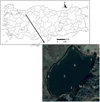 |
Fig. 1 Sampling stations in and around Lake Karamurat (Mudurnu, Bolu, Turkey). As explained in the text, sampling was irregular from stations 5-6 and Sp-1 (spring run reaching to the lake) and Sp-2 (head of an unnamed rheocrene spring). |
Mean, maximum (Max), and minimum (Min) values of environmental variables and occurrences of live taxa. Missed sampling dates (n values). Additional sample (sampling date 7/27/2019) was collected from a shallow water body in front of an unnamed rheocrene spring located about three km south of the lake. Abbreviations: Tw, water temperature (°C); Atm, atmospheric pressure (mmHg); DO (%), oxygen saturation (%); DO, dissolved oxygen concentration (mg L−1); SEC, standard (at 25 °C) electrical conductivity (µS cm−1); EC, electrical conductivity (µS cm−1); TDS, Total dissolved solids (mg L−1); Sal, salinity (ppt); Ta, air temperature (°C); Chill, wind chill (°C); Rh, relative humidity (%); HI, heat index (°C); Dp, dew point (°C); Wind, wind speed (ms−1); Species abbreviations: CO, Cypria ophtalmica; DS, Darwinula stevensoni; NN, Neglecandona neglecta; CC, Candona candida; Csp1, Candona sp.1.; CV, Cypridopsis vidua; Cysp1, Cypridopsis sp.1; COv, Cyclocypris ovum; NM, Notodromas monacha; IB, Ilyocypris bradyi; PS, Potamocypris cf. similis; PF, Psychrodromus cf. fontinalis; PO, Psychrodromus olivaceus; j, juvenile.
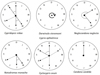 |
Fig. 2 Ostracod Watch Model (OWM) of seven species reported from Lake Karamurat. Months (January, February, March…) are shown with the capital letters as J, F, M, respectively. Angels indicate species occurrences, full circle shows all year around occurrences, broken lines display species occurrences for that of particular month. |
2.2 Statistical approaches
Seasonality of individual species was characterized using Ostracod Watch Model (OWM) (Külköylüoğlu, 1998). Binary data was used to compare Shannon-Wiener (S-W) alpha diversity values among the lakes using Species diversity and Richness program (Version 4) (Seaby and Henderson, 2006). S-W index is one of the most commonly used statistical approaches in limnological studies where S-W values are considered low (1.5) to high (3.5) species diversity (Magurran, 1988). Species occurrence data was used to run a Levene's test for homogeneity among the stations.
A t-test with unequal variances was used to compare the means of environmental variables among stations. Significance was set at P ≤ 0.05. Analyses of variance (ANOVA) with F-test (P < 0.05) was used to test for differences in the mean species occurrences among stations. When the assumptions of normality were not met, nonparametric, Spearman Rank Correlation analyses using presence/absence data was used to show correlational patterns and clustering relationships among lakes. A dendrogram with Jaccard similarity values among 14 lakes was constructed using PAST 4.03 software program (Hammer et al., 2001). Total of 13 lakes run together were chosen based on long-term (one year or more) seasonal or monthly studies completed. In here, our hypothesis is to estimate no difference between the mean number of species among the lakes investigated.
Canonical correspondence analysis (CCA) was used to show species-environmental correlations and to identify which environmental factors significantly correlate with ostracod occurrence patters in Lake Karamurat. CCA was run using CANOCO for Windows version 4.5 (ter Braak, 1986). A detrended correlation analysis (DCA) was run first to evaluate suitability of CCA. Monte Carlo test with 499 permutation was applied with CCA. Rare species were deleted to reduce the arc-effect, and only independent variables (i.e., environmental variables) with inflation factors <10 were retained (ter Braak and Barendregt, 1986; Birks et al., 1990). C2 program with a transfer function of weighted averaging regression was used to calculate ecological tolerance (tk) and optimum (uk) values for each species (Juggins, 2003). Species monthly occurrences were illustrated by Ostracod Watch Model (OWM) (Külköylüoğlu, 1998). The model provides figurative representation of a species monthly and/or seasonal occurrence patterns. This is the first model used in such a case. Accordingly, the followings are the characteristics of the model: (i) it makes interpretation possible about species ontogeny (although this was not the aim of the present study), (ii) it simplifies long-term occurrence patterns of species, (iii) it provides an easy way to compare seasonal occurrences of two or more species reported from different habitats, (iv) it gives possibility of comparing species occurrences among the sites, and (v) figurative results aid to relate ecological data with species occurrences. The pseudorichness ratio (Rp = noncosmopolitan/cosmopolitan) of the lake was calculated to estimate dominancy of cosmopolitan (co) over noncosmopolitans (nc) species (Külköylüoğlu, 2013). Hypothesis of the pseudorichness “…there is no statistically significant difference between the numbers of cosmopolitan and noncosmopolitan species distribution in the lake” was tested along with the three scenarios below (see discussion for the details):
Case 1) nc / co > 1, number of cosmopolitans < number of noncosmopolitan.
Case 2) nc / co = 1, equilibrium point.
Case 3) nc / co < 1, number of cosmopolitans > number of noncosmopolitan.
3 Results
3.1 Limnoecology of the Lake Karamurat
Maximum length, width and depth of Lake Karamurat was 310 m, 186 m, and 9.25 m, respectively while Secchi disk transparency was about 4.5 m. The lake is monomictic (vertical mixing once per year). It receives inflow from two springs and has a single outflow. There was no significant difference in the mean values of the variables Tw, EC, DO, pH among stations (P > 0.05, t-test with unequal variances). Lake Karamurat is a well-oxygenated (8.38 mg L−1), alkaline (pH 7.95), freshwater lake (EC 145 μS cm−1) with cool average water temperature 15.33 °C. The humidity around the lake area averaged 68.44%, and air temperature averaged 22 °C during the study (Tab. 1).
3.2 Ostracod assemblages
Ten living taxa (Tab. 2, Supplementary material) were found with Darwinula stevensoni and Cypria ophtalmica being the dominant species at nearly all stations (Fig. 2). A rare species, Notodromas monacha, was collected from the lake in May and June. Potamocypris cf. similis, Psychrodromus cf. fontinalis and P. olivaceus was only reported from spring stations. Common (i.e., cosmoecious species) species generally exhibited higher tolerance and lower optimum values (Tab. 3) than rare species. This corresponds to the known literature. Among the variables, Tw, DO, pH and EC appeared to have the greatest effect on species occurrences and accounted for 91% of the correlation between species and environmental variables in CCA (Fig. 3 and Tab. 4). CCA diagram also displayed a separation of the spring and lake water samples (Fig. 3) where DO seems to be the most effective variable on the spring fauna.
There was a significant (P < 0.05) difference in the number of species collected per month, suggesting that species distribution was not constant over time. Shannon–Wiener (S–H') alpha diversity (2.079) was lower than several other lakes in the region (Tab. 5). This was also supported by the other diversity indices. The number of species reported was significantly different (P < 0.01) among the 13 assessed lakes. Lake Karamurat exhibited similar species diversity and significant positive correlation (Fig. 4) and clustering relationship with two lakes (Lake Abant and Lake Yeniçağa) located within the same geographic region (Fig. 5). Concluding the pseudorichness hypothesis, a significant difference (P < 0.05) between the mean number of cosmopolitan and noncosmopolitan species was detected. The pseudorichness ratio (noncosmopolitan/cosmopolitan species) (Case 3) of the lake (Pr = 0.25 < 1) illustrates dominancy of cosmopolitan species (8 spp.) over noncosmopolitans (2 spp.). Each species has its own species-specific ecological preference and occurrence pattern, but species with overlapping patterns exhibited similar ecological characteristics. Lake Karamurat is being impacted by human activities and warrants strict conservation programs.
Case 1) nc / co > 1, number of cosmopolitans < number of noncosmopolitan.
Case 2) nc / co = 1, equilibrium point.
Case 3) nc / co < 1, number of cosmopolitans > number of noncosmopolitan.
Habitat type and designation as cosmopolitan (C) or noncosmopolitan (NC).
Ecological optimum (Opt) (species tend to show relatively high abundance values and occurrences), and tolerance values (Tol = species tolerance value for studied environmental variables) of 13 taxa reported from the Lake Karamurat and springs. Abbreviations: Count (numbers of species occurrences); Max (maximum numbers of adult individuals); Hill′s coefficient (N2 = value or measure of effective number of species occurrences); TW, water temperature; DO (dissolved oxygen); EC (electrical conductivity).
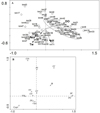 |
Fig. 3 CCA diagram showing correspondence between (A) Four environmental variables (DO, Tw, pH, EC) and stations, and (B) Species. Oval circle covers mostly spring samplings. Each sampling (km1, km2, …) represents sampling number from Lake Karamurat. Rest of the abbreviations are given in Table 1. |
Results of CCA. Eigenvalues reported in here are canonical and correspond to axes constrained by the environmental variables.
Shannon-Wiener (S-H′) alpha diversity and Pielou J evenness values of 14 water bodies.
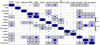 |
Fig. 4 Spearman correlation analysis. Size of blue (positive correlation) and red (negative correlation) colored elipse is proportion to strenth of correlation. |
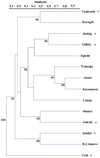 |
Fig. 5 Dendrogram based on Jaccard similarity values among eight natural lakes and six artificial (*) reservoirs. Lake Uşak is used as the outgroup, based on its isolation, differences in species composition, and lowest species diversity. |
4 Discussion and conclusion
4.1 Species diversity
Both alpha diversity (H′ = 2.08; H′-variance = 0.05; Exp H′ = 8 spp) and Pielou J evenness values of the lake were lower than many other lakes in Turkey (Tab. 5). Species richness (8 spp.) was below the mean value (10.5) of lakes compared here. Although species richness, and species diversity may not be the only criterion for selecting sites to protect (Volvenko, 2011), they can be useful to identify conservation priorities (Singh et al., 2021). Because of its structure, species evenness may also be uniquely informative for conservation and management decisions (Hill, 1973). Lower evenness values indicate the presence of rare species that are more prone to anthropogenic activities. The low alpha and evenness values suggest that Lake Karamurat may be impacted by anthropogenic activities, perhaps from residents living around the lake, including fishing and water withdrawal for irrigation. Such activities may impact water quantity and habitat quality, resulting in an ostracod assemblage dominated by cosmopolitan species (but see below).
4.2 Pseudorichness ratio and cosmoecious species
We rejected our hypothesis that the mean number of species would not differ among investigated lakes. Relative to the other lakes, Lake Karamurat was relatively species poor and had a low pseudorichness ratio. The pseudorichness ratio (Pr = 0.25) indicated dominancy of cosmopolitan species over noncosmopolitan species. Prevalence of agricultural fields and human settlements around the lake may negatively impact species diversity and evenness. However, I am not aware of previous studies on lake conditions, so cannot compare past and present water quality and conditions. Nevertheless, dominancy of at least eight common species supports long-term physicochemical fluctuations. As stated above, almost all these common species are tolerant of a wide range of ecological conditions. They are widely distributed among a variety of habitats. Külköylüoğlu (2013) called this kind of species cosmoecious. Such species are less affected by changes in water quality. In disturbed habitats, cosmoecious species may dominate over rare and/or endemic species. Lorenschat et al. (2014) showed that cosmopolitan species of Lake Ohrid were common in the northern parts of the lake where anthropogenic activities were high, and suggested that changes in physicochemical characteristics (e.g., Tw, EC, pH) can favor those species with high tolerances. Similar results were observed in lakes and other water bodies in Turkey (Külköylüoğlu et al., 2017; Gürer and Külköylüoğlu, 2019), and in the current study, we also found that such factors were strong predictors of community composition and favored cosmoecious species (Çapraz et al., 2022). Accordingly, we predict that managing water quality is a more sufficient way to conserve diverse species assemblages.
4.3 Species assemblages and autecology
Not all of the Lake Karamurat ostracods were cosmopolitan. The rare species, N. monacha, is of special importance. The genus, Notodromas, includes six extant species from Holarctic (Nearctic + Palearctic) and Oriental zoogeographical regions (Meisch et al., 2019). Members of the genus have been reported from different aquatic habitats including lakes, ponds, reservoirs, rivers and streams (Meisch, 2000; Smith et al., 2022). There are two representatives of the genus in Turkey, N. monacha and N. persica, reported from a well, ponds, and lakes (Gülen, 1982; Dügel et al., 2008; Yavuzatmaca et al., 2018). N. monacha, along with N. persica and Cypris pubera, was first reported from an irrigation well (4 m diameter × 10 m depth) in Bodrum (Muğla, Turkey) by Gülen (1982). Individuals were collected on May 7, 1977, when the water temperature of the well was 18 °C. Since then, the species has only been reported rarely from lake littoral zones, always in relatively low abundance. This is also the case in the present study. Finding the species from May, June and August corresponds to the previous records from Turkey (Dügel et al., 2008; Yavuzatmaca et al., 2018; Akdemir et al., 2020) and elsewhere (Petkovski, 1959, 1977; Hiller, 1972). For example, Hiller (1972) reported the species from shallow aquatic waters in Germany between May and August (water temperature ranged from 16.9 to 25.8 °C, respectively) while Petkovski (1977) found the species from the littoral zones of Lake Mindel (Germany) in June, when water temperature was recorded as 26 and 28 °C. Kiss (2002, 2007) encountered the species from two lakes (Kõhegyi and Fehér) in Hungary from April to October. Although knowledge about its ecological preferences is limited, it seems that this species is very active (due to its long swimming setae) in lentic habitats where it prefers cool and well oxygenated water (Külköylüoğlu et al., 2008; Yavuzatmaca et al., 2018; Akdemir et al., 2020).
In contrast to N. monacha, two common species, D. stevensoni and C. ophtalmica, were the most common species in the lake. D. stevensoni is widely distributed in a variety of lentic and lotic nonmarine habitats (Meisch, 2000; Rossi et al., 2004; Yavuzatmaca and Külköylüoğlu, 2019). The species lacks swimming setae and occupies shallow and deep benthic habitats of lakes, occurring year around (cf. Fig. 2). It prefers cool and oxygenated water but is tolerant of broad environmental conditions (Yavuzatmaca et al., 2015). In the CCA diagram (Fig. 3), the species is located nearby the variable water temperature. This supports its close relationship to the temperature. Similar preferences were also found in earlier studies (Bronstein, 1947; Ranta, 1979; Külköylüoğlu, 2000; Meisch, 2000).
Unlike D. stevensoni, C. ophtalmica has long natatory setae on the second antenna and is able to swim. The widely distributed species has been generally encountered from the deeper parts of large water bodies such as lakes and ponds but is also known from streams, wetlands, canals, springs and caves (Bellavere et al., 1999; Meisch, 2000; Rossetti et al., 2006; Alkalaj et al., 2019; Külköylüoğlu et al., 2022). The species has comparatively high ecological tolerances to several environmental variables (Külköylüoğlu et al., 2022). The species was encountered year around in the current study, as previously documented (Meisch, 2000; Martins et al., 2010; Külköylüoğlu et al., 2014, 2022). The species is located closer to the center of the CCA diagram, suggesting that its presence is not strongly correlated with measured environmental variables. Similar results were reported by Külköylüoğlu et al. (2022) who noted relatively high tolerance levels for the species.
Neglecandona neglecta is another common, bottom-dwelling species reported from the lake. Its seasonal occurrence pattern was like the two previous species (D. stevensoni, C. ophtalmica), except that N. neglecta was not found between the months February and May. Eurychronal occurrences in a variety of lotic and lentic habitats have previously been reported for this cosmopolitan species (Karanovic, 2012; Yavuzatmaca et al., 2018). The broad distribution of the species has been attributed to broad tolerance to different abiotic factors (Meisch, 2000; Batmaz et al., 2020). N. neglecta was among the two other common species with high tolerance to water temperature and dissolved oxygen (Tab. 3). It is surprising that the species was not encountered from February through May. N. neglecta may have a unique seasonal occurrence pattern in the lake, although the explanation remains unclear.
Unlike the most common eurychronal species discussed above, three species (Cypridopsis vidua, Cyclocypris ovum, Candona candida) displayed stenochronal occurrence patterns within some month(s) or season(s). Seasonality of two taxa (Candona sp.1., Cypridopsis sp.1) is not discussed here due to lack of identification at the species level. Among the stenochronal species, C. vidua occurred in spring-summer (May-June) and fall-winter (November-December) (Fig. 2). Although the species is common worldwide and occurs in variety of habitats (lakes, ponds, pools, springs, reservoirs, ditches, canals etc.), it is generally not encountered during winter. This pattern was recently refuted by Gürer and Külköylüoğlu (2019) who monitored its occurrence in a natural lake (Lake Karagöl) in Turkey for more than a year. The authors showed that C. vidua can be found all year round because it can grow one or two generations (Meisch, 2000). C. vidua is highly tolerant to a wide range of ecological factors. For example, Sánchez-Bayo and Goka (2007) demonstrated experimentally that C. vidua tolerated high amounts of insecticide (i.e., imidacloprid), commonly used in rice fields. The species has been recorded from eutrophic lakes, such as Lake Mendota (USA) (Kitchell and Clark, 1979), and a eutrophic wetland (Külköylüoğlu, 2005). In addition to its broad ecological tolerance, the species is a good swimmer. High mobility can contribute to increased survival and may contribute to its worldwide distribution.
Cyclocypris ovum primarily occurred from November to December although individuals were occasionally collected in other months (Fig. 2). According to the Janz (1988), C. ovum has one generation per year and always occurs in low abundance although numbers increased during summer (in June). This was due to the death of the adults from earlier generation (Janz, 1988). These observations corroborate previous studies. For example, Mesquita-Joanes et al. (2002) collected the species from a karstic lake in Spain (Lake La Cruz) and showed that adults survived about 6–8 months in in vitro conditions. The authors reported that numbers of adults declined in summer and juveniles vanished until the next hatch. The species is one of several common species that plots around the center of the CCA biplot (Fig. 3). This species has very long natatory setae which aid in movement and dispersion. Like C. vidua, C. ovum's high ecological tolerance contributes to a broad distribution and occurrence in a variety of aquatic habitats.
C. candida is a stenochronal species present in low numbers during a single sampling event. Interestingly, the species is very common elsewhere (Meisch, 2000), often co-occurring with C. ophtalmica, I. bradyi, C. neglecta, and D. stevensoni. Like D. stevensoni, this species is benthic and globally distributed. With one generation, adults live seven to nine months (Alm, 1915), but occurrence patterns vary depending on environmental conditions. For example, Hartmann and Hiller (1977) documented males and females year-round, suggesting a eurychronal occurrence. The authors stated that its occurrence may be correlated to water temperature below 18 °C during summer months. Only five females and a male were found in 7.2 °C water in December. However, these findings cannot be generalized at the moment due to lack of data.
I. bradyi was the only species found from both lake and spring habitats. In the lake, only a single female was observed in June (but valves and carapaces were collected from several months) while it was observed more frequently in spring habitats in different months. I. bradyi is one of the most common and widely distributed species from a variety of lotic and lentic ecosystems. The reasons for its scarcity in Lake Kara Murat is not clear, but may be related to water temperature. The mean of water temperature in the springs was 11.3 °C (9.6–12.2 °C) throughout the study while the lake temperature was 24.9 °C in June.
Three taxa occurred in the springs, but not the lake: Potamocypris cf. similis, Psychrodromus cf. fontinalis, and Psychrodromus olivaceus. P. cf. similis exhibited subtle morphological differences from the type specimens, that included color and carapace structure. We leave its' identity open for further taxonomic investigation, so general conclusions about its ecology and occurrence cannot be discussed. However, the species often co-occurs with P. olivaceus, which is another common species reported from springs and/or cold and well oxygenated spring-fed waters. Külköylüoğlu et al., (2015) observed these two species year-round in a rheocrene spring in Turkey and noted that Mg/Ca ratio varied in P. similis but not in P. olivaceus. Variability in the stable isotope values for P. similis suggested that the species may show seasonal responses to environmental changes while stable isotope values for P. olivaceus, suggests a more stable habitat (i.e. groundwater) (Külköylüoğlu et al., 2015). Overall, P. olivaceus has a much broader geographical distribution and higher environmental tolerance ranges relative to P. similis. Unlike P. olivaceus and P. similis, there is little information about P. cf. fontinalis (see details in Meisch, 2000). P. cf. fontinalis was generally encountered from June to November (excepting a single individual in February). Hence, its seasonality apparently overlaps with P. olivaceus. That these three species were apparently restricted to cold spring waters strongly supports the idea that they prefer a relatively stable and narrow range of environmental conditions (i.e., cold, well-oxygenated slightly alkaline water bodies), as previously reported.
Conflict of interest
On behalf of all authors, the corresponding author states that there is no conflict of interest.
Supplementary Material
Supplementary files provided by the author. Access Supplementary Material
Acknowledgments
Dr. Benjamin Hutchins (Texas State University) is thanked for his comments and suggestions in English in the first draft. Çağdaş Güleç, Filiz Batmaz, Çağatay Çapraz, Ahmet Özdilek and Alper Ataman are thanked for their help during the field and laboratory works.
References
- Akdemir D, Külköylüoğlu O, Yavuzatmaca M, Tanyeri M, Gürer U, Alper A, Dere Ş, Çelen E, Yılmaz O, Özcan G. 2020. Ecological characteristics and habitat preferences of Ostracoda (Crustacea) with a new bisexual population record (Muğla, Turkey). Appl Ecol Environ Res 18: 1471–1487. [CrossRef] [Google Scholar]
- Alkalaj J, Hrafnsdóttir Þ, Ingimarsson F, Smith R, Kreiling A-K, Mischke S. 2019. Distribution of Recent non-marine ostracods in Icelandic lakes, springs, and cave pools. J Crust Biol 39. DOI:10.1093/jcbiol/ruz008 [Google Scholar]
- Alm G. 1915. Monographie der schwedischen Süsswasser-Ostracoden nebst systematischen Besprechungen der Tribus Podocopa. Zool Bidr Upps 4: 1–248. [Google Scholar]
- Balamurugan S, Vishakan R, Subramanian P. 2002. Seasonal variation in non-marine ostracod population in Cauvery River, Tiruchirappalli, Tamil Nadu, India. J Exp Zool India 5: 181–187. [Google Scholar]
- Batmaz F, Külköylüoğlu O, Akdemir D, Yavuzatmaca M. 2020. Effective roles of ecological factors on nonmarine Ostracoda (Crustacea) in shallow waters of Malatya (Turkey). Ecol Res 35: 511–523. [CrossRef] [Google Scholar]
- Bellavere C, Benassi G, McKenzie KG, Rossi V. 1999. Non marine Ostracoda (Crustacea) from temporary ponds in the Isole Pelagie (Sicily, Italy). Yerbilimleri 35: 29–38. [Google Scholar]
- Benson RH. 1969. Ostracodes of the Rita Blanca lake deposits. Geol Soc Am Memoir 113: 107–115. [Google Scholar]
- Birks HJB, Line JM, Juggins S, Stevenson AC, ter Braak CJF. 1990. Diatoms and pH reconstruction. Philos Trans R Soc London B 702: 263–278. [Google Scholar]
- Bronstein ZS. 1947. Fresh-water Ostracoda. Fauna of the USSR, crustaceans, V. 2. No. 1. Russian translation series, 64. Academy of Sciences of the USSR Publishers, Moscow, Russia (English translation 1988). New Delhi: Amerind Publishing Company. [Google Scholar]
- Çapraz Ç, Külköylüoğlu O, Akdemir D, Yavuzatmaca M. 2022. Determining effective environmental factors and ecology of non-marine Ostracoda (Crustacea) in Giresun, Turkey. Int J Limnol 58: 3. [CrossRef] [EDP Sciences] [Google Scholar]
- Dügel M, Külköylüoğlu O, Kılıç M. 2008. Species assemblages and habitat preferences of Ostracoda (Crustacea) in Lake Abant (Bolu, Turkey). Belg J Zool 138: 50–59. [Google Scholar]
- Gülen D. 1982. Türkiye için yeni Notodromas (Ostracoda) türleri. Tübitak VII Bilim kongresi tebliği 561–564. [Google Scholar]
- Gürer U, Külköylüoğlu O. 2019. Limnoecological characteristics and seasonal distribution of Ostracoda (Crustacea) in a natural lake (Lake Karagöl) and a man-made reservoir (Lake Uşak) in northeastern Turkey. Bull Soc Nat Luxemb 121: 277–289. [Google Scholar]
- Hammer Ø, Harper DAT, Ryan PD. 2001. PAST: Paleontological Statistics Software Package for Education and Data Analysis. Palaeontol Electron. 4: 9 [Google Scholar]
- Hartmann G, Hiller D. 1977. Beitrag zur Kenntnis der Ostracodenfauna des Harzes und seines nördlichen Vorlandes (unter besonderer Berücksichtigung des Männches von Candona candida). Naturw Verein Goslar 125: 99–116. [Google Scholar]
- Hill MO. 1973. Diversity and evenness: a unifying notation and its consequences. Ecology 54: 427–432. [CrossRef] [Google Scholar]
- Hiller D. 1972. Untersuchungen zur Biologie und zur Ökologie limnischer Ostracoden aus der Umgebung von Hamburg. Arch Hydrobiol Suppl Band 40: 400–497. [Google Scholar]
- Hoff CC. 1943. Seasonal changes in the ostracod fauna of temporary ponds. Ecology 24: 116–118. [CrossRef] [Google Scholar]
- Hull SL. 1997. Seasonal changes in ostracod abundance and diversity on four species of algae with dijering structural complexity. Mar Ecol Prog Ser 161: 71–82. [CrossRef] [Google Scholar]
- Hutchinson GE. 1967. A Treatise on Limnology. 2. Introduction to lake biology and the limnoplankton. Wiley Intersci. Publ. New York. 1115 pp. [Google Scholar]
- Janz H. 1988. Untersuchung über die Zusammensetzung der Bodenfauna von Fallaubtümpeln im Naturpark Schönbuch in Abhängigkeit vom Zersetzungsgrad des Rotbuchenlaubs. Diss. Univ. Tübingen. 200 pp. [Google Scholar]
- Juggins S. 2003. Software for ecological and palaeoecological data analysis and visualization C2 User Guide, University of Newcastle, Newcastle-upon- Tyne, UK, 69 pp. [Google Scholar]
- Karanovic I. 2012. Recent freshwater ostracods of the world, Springer-Verlag Berlin Heidelberg, 608 pp. [Google Scholar]
- Keyser D, Nagorskaya L. 1998. Ostracods in the vicinity of Minsk, Belarus. Mitt zool Mus Hamburg 95: 115–131. [Google Scholar]
- Kiss A. 2002. The Cladocera, Ostracoda and Copepoda fauna of the Fehér-tó (Fertő-Hanság National Park). In: The Fauna of the Fertő-Hanság National Park. Hungarian Natural History Museum, Budapest. 245–248. [Google Scholar]
- Kiss A. 2007. Factors affecting spatial and temporal distribution of Ostracoda assemblages in different macrophyte habitats of a shallow lake (Lake Fehér, Hungary). Hydrobiologia 585: 89–98. [CrossRef] [Google Scholar]
- Kitchell JA, Clark DL. 1979. Distribution, ecology, and taxonomy of recent freshwater Ostracoda of Lake Mendota, Wisconsin. University of Wisconsin-Madison, Madison, WI. Publication of the Natural History Council, University of Wisconsin-Madison, Wisconsin Geological and Natural History Survey Number 1: 24 pp. [Google Scholar]
- Külköylüoğlu O. 1998. Freshwater Ostracoda and their quarterly occurrence in Şamlar Lake (İstanbul, Turkey). Limnologica 28: 229–235. [Google Scholar]
- Külköylüoğlu O. 1999. Seasonal distribution of freshwater Ostracoda (Crustacea) in springs of Nevada. Geosound 35: 85–91. [Google Scholar]
- Külköylüoğlu O. 2000. The importance of cosmopolitan and indicator species of Ostracoda (Crustacea) in Turkey based on some water parameters. National Water Product Conference, Sinop (Turkey), 2000: 421–437. [With English abstract.] [Google Scholar]
- Külköylüoğlu O. 2005. Ecology and phenology of freshwater ostracods in Lake Gölköy (Bolu, Turkey). Aquat Ecol 39: 295–304. [Google Scholar]
- Külköylüoğlu O. 2013. Diversity, distribution, and ecology of nonmarine Ostracoda (Crustacea) in Turkey: application of pseudorichness and cosmoecious species concepts. Recent Res Dev Ecol 4: 1–18. [Google Scholar]
- Külköylüoğlu O. Altınsaçlı S. Kubanç C. 1993. Küçükçekmece Gölünün (İstanbul) ostrakod (Crustaceae) faunası ve mevsimsel dağılımı. Turk J Zool 17: 19–27. [Google Scholar]
- Külköylüoğlu O, Altınsaçlı S, Kılıç M, Kubanç C. 1995. The Ostracoda (Crustacea) fauna of Lake Büyükçekmece (İstanbul) and seasonal distributions. Turk J Zool 19: 249–256. [Google Scholar]
- Külköylüoğlu O. Çelikbaş B. Ataman A. 2022. Habitat destruction in wetland affects Ostracoda (Crustacea) species occurrence patterns amid different aquatic habitats. Aquat Ecol 56: 605–618. [CrossRef] [PubMed] [Google Scholar]
- Külköylüoğlu O, Palacios-Fest MR, Baron D, Sarı N. 2015. Monthly variations in the shell structure of two freshwater ostracod (Crustacea) species in Karapınar Spring (Bolu, Turkey). Turk J Zool 39: 906–916. [CrossRef] [Google Scholar]
- Külköylüoǧlu O, Sarı N, Dügel M, Dere Ş, Dalkıran N, Aygen C, Dinçer SÇ. 2014. Effects of limnoecological changes on the Ostracoda (Crustacea) community in a shallow lake (Lake Çubuk, Turkey). Limnologica 46: 99–108. [CrossRef] [Google Scholar]
- Külköylüoğlu O, Tanyeri M, Yılmaz O. 2017. Alpha and beta species diversity of freshwater Ostracoda (Crustacea) and their seasonal distribution in Seben-Taşlıyayla Reservoir (Bolu, Turkey). Turk J Fish Aquat Sci 17: 1357–1365. [Google Scholar]
- Lorenschat J, Schwalb A. 2013. Autecology of the extant ostracod fauna of Lake Ohrid and adjacent waters: a key to paleoenvironmental reconstruction. Belg J Zool 143: 42–68. [Google Scholar]
- Lorenschat J, Pérez L, Correa-Metrio A, Brenner M, Von Bramann U. et al. 2014. Diversity and spatial distribution of extant freshwater Ostracodes (Crustacea) in Ancient Lake Ohrid (Macedonia/Albania). Diversity 6: 524–550. [CrossRef] [Google Scholar]
- Magurran AE. 1988. Ecological diversity and its measurement. Princeton: Princeton University Press, 179 pp. [Google Scholar]
- Meisch C. 2000. Freshwater Ostracoda of Western and Central Europe, Heidelberg: Spektrum Akademischer Verlag, Süßwasserfauna von Mitteleuropa, 522 pp. [Google Scholar]
- Meisch C, Smith RJ, Martens K. 2019. A subjective global checklist of the extant non-marine Ostracoda (Crustacea). Eur J Taxon 492: 1–135. [Google Scholar]
- Mesquita-Joanes F, Boronat MD, Miracle M. 2002. The life history of Cyclocypris ovum (Ostracoda) in a permanent karstic lake. Arch Fur Hydrobiolog 155: 687–704. [CrossRef] [Google Scholar]
- Mezquita F, Griffiths HI, Sanz S, Soriak JM, Piñón A. 1999. Ecology and distribution of ostracods associated with flowing waters in the eastern Iberian Peninsula. J Crustn Biol 19: 344–354. [CrossRef] [Google Scholar]
- Mezquita F, Sanz-Brau A, Wansard G. 2000. Habitat preferences and population dynamics of Ostracoda in a helocrene spring system. Can J Zool 78: 840–847. [CrossRef] [Google Scholar]
- Petkovski T. 1959. Süsswasserostracoden aus Jugoslawien VI. Acta Mus Maced Sci Nat 4: 53–75. [Google Scholar]
- Petkovski T. 1977. Ostracodenfauna des Mindelsees. Acta Mus macen Sci nat 15: 49–94. [Google Scholar]
- Ranta E. 1979. Population biology of Darwinula stevensoni (Crustacea, Ostracoda) in an oligotrophic lake. Ann Zool Fenn 16: 28–35. [Google Scholar]
- Rossi V, Gandolfi A, Gentile G, Geiger W, Menozzi P. 2004. Low genetic variability in the ancient asexual ostracod Darwinula stevensoni. Ital J Zool 71: 135–142. [CrossRef] [Google Scholar]
- Rossetti G, Bartoli M, Martens K. 2004. Limnological characteristics and recent ostracods (Crustacea, Ostracoda) of freshwater wetlands in the Parco Oglio Sud (Northern Italy). Int J Limnol 40: 329–341. [CrossRef] [EDP Sciences] [Google Scholar]
- Rossetti G, Martens K, Meisch C, Tavernelli S, Pieri V. 2006. Small is beautifull: diversity of freshwater ostracods (Crustacea, Ostracoda) in marginal habitats of the province of Parma (Northern Italy). J Limnol 65: 121–131. [CrossRef] [Google Scholar]
- Sánchez-Bayo F, Goka K. 2007. Simplified models to analyse time- and dose-dependent responses of populations to toxicants. Ecotoxicology 16: 511–523. [CrossRef] [PubMed] [Google Scholar]
- Seaby RM, Henderson PA. 2006. Species Diversity and Richness Version 4. Pisces Conservation Ltd., Lymington, England. [Google Scholar]
- Smith R, Deckker P, Kamiya T. 2022. The ontogeny of two species of the family Notodromadidae (Cypridoidea, Ostracoda, Crustacea); taxonomic and palaeogeographic significance. Zootaxa 5094: 351–395. [CrossRef] [PubMed] [Google Scholar]
- Singh V, Shukla S, Singh A. 2021. The principal factors responsible for biodiversity loss. J Plant Sci 6: 011–014. [Google Scholar]
- ter Braak CJF. 1986. Canonical correspondence analysis: a new eigenvector technique for multivariate direct gradient analysis. Ecology 67: 1167–1179. [CrossRef] [Google Scholar]
- ter Braak CJF, Barendregt LG. 1986. Weighted averaging of species indicator values: its efficiency in environmental calibration. Math Biosci 78: 57–72. [CrossRef] [Google Scholar]
- Veech J. 2013. A probabilistic model for analysing species co-occurrence. Glob Ecol Biogeogr 22. DOI:10.1111/j.1466-8238.2012.00789.x [Google Scholar]
- Volvenko IV. 2011. The importance of species diversity and its components as criteria for selecting nature conservation areas. Russ J Mar Biol 37: 604–607. [CrossRef] [Google Scholar]
- Wise CD. 1961. Taxonomy and ecology of freshwater ostracods of south-Central Texas. PhD, University of New Mexico, Las Cruces, USA. [Google Scholar]
- Yavuzatmaca M. 2020. Species assemblages of Ostracoda (Crustacea) from west-site of Turkey: their indicator potential for lotic and lentic habitats. Biologia DOI:10.2478/s11756-020-00494-y [Google Scholar]
- Yavuzatmaca M, Külköylüoğlu O. 2019. Fossil and Recent distribution and ecology of ancient asexual ostracod Darwinula stevensoni (Ostracoda, Crustacea) in Turkey. LimnoFish 5: 47–59. [CrossRef] [Google Scholar]
- Yavuzatmaca M, Külköylüoğlu O, Akdemir D, Çelen E. 2018. On the relationship between the occurrence of ostracod species and elevation in Sakarya province, Turkey. Acta Zool Acad Sci H 64: 329–354. [CrossRef] [Google Scholar]
- Yavuzatmaca M, Külköylüoğlu O, Yılmaz O. 2015. Distributional patterns of non-marine Ostracoda (Crustacea) in Adıyaman province (Turkey). Int J Limnol 51: 101–113. [CrossRef] [EDP Sciences] [Google Scholar]
Cite this article as: Külköylüoğlu O. 2023. Ostracoda (Crustacea) and limnoecological characteristics of Lake Karamurat (Bolu, Turkey): Testing pseudorichness hypothesis. Int. J. Lim. 59: 1.
All Tables
Mean, maximum (Max), and minimum (Min) values of environmental variables and occurrences of live taxa. Missed sampling dates (n values). Additional sample (sampling date 7/27/2019) was collected from a shallow water body in front of an unnamed rheocrene spring located about three km south of the lake. Abbreviations: Tw, water temperature (°C); Atm, atmospheric pressure (mmHg); DO (%), oxygen saturation (%); DO, dissolved oxygen concentration (mg L−1); SEC, standard (at 25 °C) electrical conductivity (µS cm−1); EC, electrical conductivity (µS cm−1); TDS, Total dissolved solids (mg L−1); Sal, salinity (ppt); Ta, air temperature (°C); Chill, wind chill (°C); Rh, relative humidity (%); HI, heat index (°C); Dp, dew point (°C); Wind, wind speed (ms−1); Species abbreviations: CO, Cypria ophtalmica; DS, Darwinula stevensoni; NN, Neglecandona neglecta; CC, Candona candida; Csp1, Candona sp.1.; CV, Cypridopsis vidua; Cysp1, Cypridopsis sp.1; COv, Cyclocypris ovum; NM, Notodromas monacha; IB, Ilyocypris bradyi; PS, Potamocypris cf. similis; PF, Psychrodromus cf. fontinalis; PO, Psychrodromus olivaceus; j, juvenile.
Ecological optimum (Opt) (species tend to show relatively high abundance values and occurrences), and tolerance values (Tol = species tolerance value for studied environmental variables) of 13 taxa reported from the Lake Karamurat and springs. Abbreviations: Count (numbers of species occurrences); Max (maximum numbers of adult individuals); Hill′s coefficient (N2 = value or measure of effective number of species occurrences); TW, water temperature; DO (dissolved oxygen); EC (electrical conductivity).
Results of CCA. Eigenvalues reported in here are canonical and correspond to axes constrained by the environmental variables.
Shannon-Wiener (S-H′) alpha diversity and Pielou J evenness values of 14 water bodies.
All Figures
|
Fig. 1 Sampling stations in and around Lake Karamurat (Mudurnu, Bolu, Turkey). As explained in the text, sampling was irregular from stations 5-6 and Sp-1 (spring run reaching to the lake) and Sp-2 (head of an unnamed rheocrene spring). |
| In the text | |
|
Fig. 2 Ostracod Watch Model (OWM) of seven species reported from Lake Karamurat. Months (January, February, March…) are shown with the capital letters as J, F, M, respectively. Angels indicate species occurrences, full circle shows all year around occurrences, broken lines display species occurrences for that of particular month. |
| In the text | |
|
Fig. 3 CCA diagram showing correspondence between (A) Four environmental variables (DO, Tw, pH, EC) and stations, and (B) Species. Oval circle covers mostly spring samplings. Each sampling (km1, km2, …) represents sampling number from Lake Karamurat. Rest of the abbreviations are given in Table 1. |
| In the text | |
|
Fig. 4 Spearman correlation analysis. Size of blue (positive correlation) and red (negative correlation) colored elipse is proportion to strenth of correlation. |
| In the text | |
|
Fig. 5 Dendrogram based on Jaccard similarity values among eight natural lakes and six artificial (*) reservoirs. Lake Uşak is used as the outgroup, based on its isolation, differences in species composition, and lowest species diversity. |
| In the text | |
Current usage metrics show cumulative count of Article Views (full-text article views including HTML views, PDF and ePub downloads, according to the available data) and Abstracts Views on Vision4Press platform.
Data correspond to usage on the plateform after 2015. The current usage metrics is available 48-96 hours after online publication and is updated daily on week days.
Initial download of the metrics may take a while.