


| Issue |
Int. J. Lim.
Volume 59, 2023
|
|
|---|---|---|
| Article Number | 11 | |
| Number of page(s) | 9 | |
| DOI | https://doi.org/10.1051/limn/2023011 | |
| Published online | 06 December 2023 | |
Research article
Determination of fishing efficiency and selectivity of multifilament trammel nets in pearl mullet, Alburnus tarichi (Güldenstädt, 1814), fishing in Lake Van, Turkey
Faculty of Fisheries, Van Yuzuncu Yil University, Zeve Campus, Van 65080, Turkey
* Corresponding author: This email address is being protected from spambots. You need JavaScript enabled to view it.
Received:
31
March
2023
Accepted:
6
November
2023
Abstract
This study aimed to determine the selectivity of multifilament trammel nets in pearl mullet, Alburnus tarichi (Güldenstädt, 1814), and fishing in Lake Van (east of Turkey). In line with this objective, the multifilament trammel nets with 20, 22 and 24 mm mesh sizes were tested in trials. The current study was conducted between September 2019 and April 2020. Thirty-four fishing operations were conducted in the 40–60 m depth range. The “SELECT” method was applied to determine the selectivity parameters. According to the results, the lengths of the optimum catching using nets with 20, 22 and 24 mm mesh sizes were calculated as 20.76 cm, 22.07 cm and 24.11 cm, respectively. The highest average CPUE in weight was 24 mm (6.007 kg/ 100 m / day). Considering the data obtained in the present study, the best optimum catch length and CPUE values for pearl mullet fishing were determined in multifilament trammel nets with a 24 mm mesh size. In conclusion, this study suggests that using a 24 mm mesh size in a lake for pearl mullet fishing will benefit fish stocks and local fishermen.
Key words: Lake Van / trammel net / pearl mullet / Van province
© EDP Sciences, 2023
1 Introduction
Lake Van is the largest in Turkey, with a surface area of 3547 km2 and a total volume of 607 km3, with a maximum recorded depth of 450 m. It also is highly alkaline in terms of water quality because contains high amounts of soda. The salinity of the lake was measured as 21.28‰, and its pH value is more than 9.5 (Sarı, 1997). The only fish species in this lake is pearl mullet, Alburnus tarichi (Güldenstädt, 1814), which can tolerate these extreme conditions. Pearl mullet makes this lake one of Turkey's most critical fishable spots. It is known that a considerable amount of inland water fishing in Turkey is done here. Pearl mullet constitutes 9.970 tons of a total of 31.596 tons of fish caught in the inland waters of Turkey (TUIK, 2019).
The Trammel nets are one of the most used fishing gear in inland waters where large-scale fishing gear is prohibited. Moreover, due to the high selectivity, these nets are crucial for sustainable fisheries (Kocabaş et al., 2018). Most of the studies on the selectivity of the trammel fishing nets in the literature are related to the effect of mesh size on species selectivity (Akamca et al., 2010; Abdissa, 2014; Cilbiz et al., 2014; Yüksel et al., 2014; Aydın et al., 2015, 2018; Hanol et al., 2015; Kumova et al., 2015; Şen, 2016; Kocabaş et al., 2018). However, the studies to determine the selectivity of the trammel nets are limited in the Lake Van Basin. The previous studies mainly tested increasing the mesh size and using different twine numbers of multifilament to determine the hanging ratios (Çetinkaya et al., 1995; Sarı and Tokaç, 2000).
The amount of stock of pearl mullet was calculated as 42700 tons in lake (Sarı, 1997). It was reported that the pearl mullet reaches sexual and reproductive maturity at the age of III (Sarı, 1997; Ünal et al., 1999). For this reason, fishing bans in trammel nets (minimum catch length) are regulated according to this age group. Therefore, it was stated that the fish stock exploited by commercial fishermen in the region was mainly between the age groups II−VII. The reports showed that the average length was 18.36 cm, and the average weight was 64.49 g (Sarı, 1997).
Over the years, due to the prohibitions and conservation studies implemented on the lake, it was observed that the average fish size of pearl mullet populations has increased (Bozaoğlu et al., 2019). However, the mesh size of the trammel nets, which are used commercially in pearl mullet fishing in lake, was increased by some local fishermen to increase the effectiveness of their nets. As a result of the limited and the lack of an up-to-date study on the selectivity of multifilament trammel nets. This study examined the selectivity of the commercial (20 mm) and experimental trammel nets (22 and 24 mm) for the pearl mullet fishing operation.
2 Material and methods
This study was conducted between September 2019 and April 2020 (Fig. 1). The trammel nets with mesh sizes of 20, 22 and 24 mm, twine number of 110 d/2no, mesh depth of 80, and hanging ratio 0.50 were used for inner panels in the trails. In outer panels, twine number of 210/3 no, mesh size of 125 mm, and mesh depth of 6 were utilized (Figs. 2–4). A 100 m net consisting of 4 parts was used for each net group. In this research, 34 fishing operations were carried out between Van Yüzüncü Yıl University port and Çarpanak Island at the depts of 40–50 m range, which have a muddy and sandy ground and where the fishermen work actively. Because pearl mullets are constantly migrating within the lake to feed, fishing operations are left entirely to the initiative of the fishermen. A fishing boat's length was 12 m. On the other hand, the engine was 12 yr old, and the engine power was 105 HP. It operated on the site under commercial operation conditions and was rented. These nets were thrown out at 09:00 a.m. and gathered after 24 h.
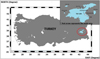 |
Fig. 1 Study area. |
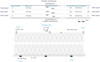 |
Fig. 2 Multifilament trammel net with a mesh size of 20 mm. |
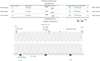 |
Fig. 3 Multifilament trammel net with a mesh size of 22 mm. |
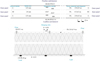 |
Fig. 4 Multifilament trammel net with a mesh size of 24 mm. |
2.1 Calculation of selectivity
Selectivity parameters of trammel nets were estimated using GILLNET software. This program takes the SELECT (Share Each Length's Catch Total) method as the basic principle, a selectivity curve and parameter estimation procedure. It provides an estimate by comparing the number of fish caught in different mesh sizes.
The SELECT (Share Each Lengthclass Catch Total) method was applied to determine the best-fit selectivity model (Millar, 1992; Millar and Holst, 1997; Millar and Fryer, 1999).
This method assumes that the number of fish length l caught with a mesh size j has one nlj Poisson distribution and is demonstrated as;
where λl is abundance of fish length l seen with the net pj (l): relative fishery abundance (j relative abundance of l fish length can be caught by j mesh size). The Poisson distribution of the number of fish length l caught by the net with j mesh size is defined as pj(l)λl. rj(l) is the selectivity curve for j mesh size (Acarlı et al., 2013).
log-likelihood distribution of nlj as;

Obtained data were analyzed with PASGEAR II version 2.5 (Kolding and Skalevik, 2011). The SELECT method was applied to evaluate selectivity parameters as five different models (Normal location, normal scale, log-normal, gamma and bi-modal). The most suitable model was selected by considering the minimum deviation value.
Normal Location :

Normal Scale ;

Log-Normal

Gamma;

Bi-modal ;

Ways of capture, which determine the width of the size distribution range and the optimal selectivity pattern, occur by getting stuck in the gills, getting stuck in the mesh, becoming entangled and bagging (trammelling) (Akamca et al., 2010). These models are based on the principle of geometric similarity and average position. This principle states that since all nets and fish of the same species are geometrically similar, selectivity curves for different mesh sizes should be equal. The most crucial statistic in evaluation is model deviation. A minor deviation is considered to find the most suitable model in five different models (normal scale, normal location, gamma, log-normal and bi-modal) (Kalaycı and Yeşilçiçek, 2012).
2.2 Calculation of catch per unit effort
Each net group's catch per unit effort (CPUE) was calculated and compared statistically. CPUE for each net group was calculated using the formula below (Godoy et al., 2003):

In this formula, ci = i. refers to the total number (or weight) of individuals captured by the trammel net group, ni = i relates to the number of trammel nets in the net group, and si = i. refers to the number of days the trammel nets group used.
Statistical analyses of the study were performed using Sigma Plot 12 ( Systat Software Inc., San Lose, CA). Daily CPUE (Weight and Number) values were determined by one-way analysis of variance (ANOVA).
3 Results
As a result of the current research, 712, 764 and 817 kg of pearl mullets were caught with mesh sizes of 20, 22 and 24 mm, respectively. Additionally, 2312 individuals-189.9 kg with 20 mm mesh width nets, 2093 individuals −191.3 kg with 22 mm mesh width nets and 2312 individuals −215.1 kg with 24 mm mesh width nets were measured. The average length of the fish was determined as 20.91 ± 1.48 cm in 20 mm net, 21.68 ± 1.52 cm in 22 mm net and 21.82 ± 1.52 cm in 24 mm net (Tab. 1).
Selectivity curves were drawn separately for normal location, normal scale, log-normal, gamma and bi-modal models using the GILLNET computer program, and the calculated parameters are given in Table 2. When the parameters given in the table were evaluated, the gamma model with the lowest standard deviation value was selected as the most suitable model for the data obtained in the study. The selectivity curve was drawn according to this model. The common selectivity parameter (k) was also determined to be 0.023 (Tab. 2). The optimum length values for the meshes determined using the relevant parameter are given in Table 3, and the selectivity curves drawn as gamma models for different meshes are given in Figure 5.
Catch number, length values of pearl mullet caught with experimental nets.
Selectivity parameter values of pearl mullet.
Modal lengths and spread values for the best fitting model (Gamma).
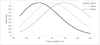 |
Fig. 5 Selectivity curves of the caught pearl mullet according to mesh sizes. |
3.1 The amount of fish caught from the nets and catch per unit effort (CPUE)
The lowest amount of fish in CPUE by weight was detected on the 34th fishing trial with 0.39 kg/100 m at 20 mm, 0.45 kg/100 m at 22 mm and 0.40 kg/100 m at 24 mm. The highest amount of fish was calculated on the 8th fishing trial with 16.05 kg/100 m at 20 mm, on the 17th fishing trial with 15.44 kg/100 m at 22 mm, and the 17th fishing trial with 17.50 kg/100 m at 24 mm (Tab. 4) and (Fig. 6). No statistical difference was found between the groups regarding weight (P = 0.684). In terms of quantity, the lowest CPUE was detected on the 34th fishing trial with 4.75 numbers/100 m in 20 mm, 21 numbers/100 m in 22 mm and 20 numbers/100 m in 24 mm. The highest amount of fish was calculated on the 8th fishing trial with 168 numbers/100 m at 20 mm, on the 8th fishing trial with 165.25 numbers/100 m at 22 mm, and on the 17th fishing trial with 165.25 numbers/100 m at 24 mm (Tab. 5) and (Fig. 7). No statistical difference in quantity was found between the groups (P = 0.972). As a result of the research, CPUE values in total weight were determined as 5.235 kg / 100 m / day at 20 mm mesh size, 5.618 kg / 100 m / day at 22 mm mesh size and 6.007 kg / 100 m / day at 24 mm mesh size (Tab. 4). CPUE values in total number was determined as 66.28 number / 100 m / day at 20 mm mesh size, 66.98 number / 100 m / day at 22 mm mesh size and 67.63 number / 100 m / day at 24 mm mesh size (Tab. 5).
The total amount of fish caught with experimental nets was determined to be 60.74, 59.95, and 64.1 kg, respectively. The number of kilos of fish removed per minute was calculated. The amount of fish removed by two fishermen from 100 m of nets with different mesh sizes was determined as 1.329, 1.583 and 1.752 kg/min, respectively (Tab. 6).
Catch per unit efforts (CPUE) per daily fishing trials by net groups by weight.
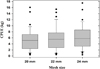 |
Fig. 6 Box-plot of the CPUE indices (kg/100 m of net) for the three types of net. The lower and higher lines of the boxes are the first and the third quantile, respectively; line in the middle of the box is the median and lines on box top and bottom delimit the minimum and maximum values excluding outliers. |
Catch per unit efforts (CPUE) per daily fishing trials by net groups by number.
 |
Fig. 7 Box-plot of the CPUE indices (number/100 m of net) for the three types of net. The lower and higher lines of the boxes are the first and the third quantile, respectively; line in the middle of the box is the median and lines on box top and bottom delimit the minimum and maximum values excluding outliers. |
Removal time of pearl mullet from the nets.
4 Discussion
The optimum catch lengths of multifilament trammel nets used in the current study for pearl mullet fishing were determined as 20.76 cm with 20 mm mesh size, 22.07 cm with 22 mm mesh size, and 24.11 cm with 24 mm mesh size. Özdemir, (2000) previously reported that the optimum catch length varies between 14.8−17.1 cm with 18 mm mesh size nets and 16.4−19.1 cm with a mesh size of 20 mm nets. Çetinkaya et al. (1995) examined the catch efficiency and selectivity of multifilament trammel nets with 17 mm, 20 mm and 24 mm mesh sizes for pearl mullet fishing in their study. Their study found the optimum catching length between 15.5 and 20.6 cm. It is thought that the critical factor of these varied results obtained in the different studies is due to the difference in the pearl mullet population structures captured over the years. During the last two decades, there have been some slight changes in the region. When these previous studies were carried out, there were no fishing bans in the region. Since the stocks are under extreme fishing pressure, it can be concluded that the average catch size was lower than today. The decrease in fish size in stocks is one of the most prominent indicators of overfishing (Ratz et al., 1999). Therefore, the smaller size of fish caught in those years was an anticipated result of overfishing in the lake.
Sarı (1997) reported that pearl mullet's first breeding fork length was 15.93 cm in males and 16.04 cm in females. It was also suggested in the study of Sarı, (1997) that the minimum mesh size of the multifilament trammel nets used in pearl mullet fishing should not be less than 20 mm, and the length of the landing size should not be less than 18 cm. The present study also determined that the lengths obtained from all trammel net groups were higher than the first breeding length of pearl mullet. The primary reason for getting the larger fish size in the current study than the previous studies is thought to be due to the increasing pearl mullet protection measures in the lake, which leads to decreased excessive and unconscious catching and thereby increases the average length of the individuals in the population.
In the present study, the average catch per unit was determined as 1.745 kg/100 m/day with 20 mm mesh size, 1.872 kg/100 m/day with 22 mm mesh size, and 2.002 kg/ 100 m/day with 24 mm mesh size. Sarı (1997) reported this effort value as 3.538 kg /100 m /day in the 1994−1995 fishing season and 2.677 kg/100 m/day in the 1995−1996 fishing season in the Van Bay. The catch per unit effort was determined by Çetinkaya et al. (1995) as 3.190 kg/100 m/day in the 1994−1995 fishing season and 2.558 kg/100 m/day for the 1995−1996 in Erciş Bay of the lake fishing. While the average catch per unit values obtained in the present study differ from the reported studies mentioned above, these differences can be considered as the fishing gear used and the periods in which the studies were conducted.
In this work, fish were caught using nets with 20, 22 and 24 mm mesh sizes and were removed from the net by two fishermen. This duration was determined as 1.329 kg/min, 1.583 kg/min and 1.752 kg/min, respectively. The labour force and time required to remove the fish from the nets are crucial for fishermen (Bozaoğlu, 2012). In this context, as seen in the present results, removing fish from the nets with a 24 mm mesh size, which was more comprehensive than the other nets used in this study, was relatively more manageable than the other nets. Therefore, it was determined that using nets with 24 mm mesh size requires less labour force and saves time. In addition, parallel to the increase in the average length of the pearl mullet population, considering the data obtained in the present study, in pearl mullet fishing, the best optimum catch length and CPUE values were determined in multifilament trammel nets with 24 mm mesh size. In conclusion, the present study suggests that using a 24 mm mesh size in a lake for pearl mullet fishing will benefit both fish stocks and the local fishermen.
Declaration of interests
The corresponding author states that there is no conflict of interest.
In this article, scientific ethical rules have been fully complied with.
All authors have approved the content of the article.
Acknowledgements
We thank the local fishing boat captains Gökmen YÜCEBAŞ, Necmettin AKBULUT, Halit AKBULUT and Cahit AKBULUT. This study was financially supported by the Van Yüzüncü Yıl University Department of Scientific Research Projects (BAP FYL-2019-8639).
References
- Abdissa B. 2014. Gillnet selectivity of lake tana piscivorous fish Labeobarbus megastoma. Ethiopian. J Biol Sci 13: 13–23. [Google Scholar]
- Acarlı D, Ayaz A, Özekinci U, Öztekin A. 2013. Gillnet selectivity for bluefish (Pomatamus saltatrix, L 1766) in Çanakkale Strait, Turkey. Turk J Fish and Aquat Sci 13: 349–353. [Google Scholar]
- Akamca E, Kiyağa VB, Özyurt CE. 2010. The selectivity of monofilament trammel nets used in the catch of gilt head bream (Sparus aurata, Linneaus, 1758) in İskenderun Bay, Turkey. J FisheriesSciences.com 4: 28–37. [Google Scholar]
- Aydın C, Cılbız M, İlhan A, Sarı HM. 2018. Gillnet and trammel net selectivity for Prussian carp (Carassius gibelio) in Marmara Lake, Turkey. Ege J Fish Aqua Sci 35: 79–87. [Google Scholar]
- Aydın E, Kahraman AE, Göktürk D, Ayaz A. 2015. Trammel net selectivity for four barbel scraper Capoeta baliki in the Sakarya River, Turkey. Turk J Fish Aquat Sci 15: 583–591. [Google Scholar]
- Bozaoğlu AS. 2012. Determination of By-Catch and Reduction in Trammel Net Fishery for Prawn in Mersin Bay, PhD Thesis. Turkey: Mersin University, 144p. (in Turkish). [Google Scholar]
- Bozaoğlu AS, Akkuş M, Yeşil A. 2019. Pearl mullet (Alburnus tarichi (Guldenstaedtii, 1814)) fishing with trammel nets in Lake Van. Com J Biol 3: 27–31. [Google Scholar]
- Cilbiz M, Hanol Z, Cilbiz N, Çinar Ş, Savaşer S. 2014. Multifilament gillnet and trammel net selectivity for the silver crucian carp (Carassius gibelio Bloch, 1782) in Eğirdir Lake, Isparta, Turkey. Turk J Fish Aquat Sci 14: 905–913. [CrossRef] [Google Scholar]
- Çetinkaya O, Sarı M, Arabacı M. 1995. A preliminary study on fishing of pearl mullet (Chalcalburnus tarichi, Pallas 1811) the catch per unite efforts and selectivity of trammel net in Lake Van, Turkey. Ege J Fish Aqua Sci 12 (1-2): 1–13. [Google Scholar]
- Godoy H, Furevik D, Lokkeborg S. 2003. Reduced bycatch of red king crab (Paralithodes camtschaticus) in the gillnet fishery for cod (Gadus moruha) in Northern Norway. Fish Res 62: 337–384. [Google Scholar]
- Hanol Z, Cilbiz M, Çinar Ş, Korkut SO, Yener O. 2015. Investigation of the selectivity of gillnet used in roach (Rutilus rutilus L., 1758) fishery in Uluabat Lake, Bursa, Turkey. J Sur Fish Sci 1: 11–20. [CrossRef] [Google Scholar]
- Kalaycı F, Yeşilçiçek T. 2012. Investigation of the selectivity of trammel nets used in red mullet (Mullus barbatus) fishery in the eastern black sea, Turkey. Turk J Fish Aquat Sci 12: 937–945. [Google Scholar]
- Kocabaş E, Öztekin A, Daban İB, Ayaz A. 2018. Gillnet selectivity for non-target fish species caught by red mullet gillnets North Aegean Sea. Ege J Fish Aqua Sci 35: 319–326. [Google Scholar]
- Kolding J, Skalevik A. 2011. PasGear 2. A Database Package for Experimental or Artisanal Fishery Data. Version 2. 5. [Google Scholar]
- Kumova CA, Altınağaç U, Öztekin A, Ayaz A, Aslan A. 2015. Effect of hanging ratio on selectivity of gillnets for bogue (Boops boops, L 1758). Turk J Fish Aquat Sci 15: 561–567. [Google Scholar]
- Millar RB. 1992. Estimating the size-selectivity of fishing gear by conditioning on the total catch. J Am Stat Assoc 87: 962–968. [CrossRef] [Google Scholar]
- Millar RB, Fryer RJ. 1999. Estimating the size-selection curves of towed gears, traps, nets and hooks. Rev Fish Biol Fish 9: 89–116. [CrossRef] [Google Scholar]
- Millar RB, Holst R. 1997. Estimation of gillnet and hook selectivity using log-linear models. ICES J Mar Sci 54: 471–477. [CrossRef] [Google Scholar]
- Özdemir H. 2000. A Study on the Catching Efficiency and Selectivity of Monofilament Gillnets Used In the Fishing of Pearl Mullet (Chalcalbumus tarichi, Pallas 1811) In Lake Van, Ms Thesis. Van, Turkey: Yüzüncü Yıl University Department of Fisheries and Processing Technology, 68p. (in Turkish). [Google Scholar]
- Ratz HJ, Stein M, Lloret J. 1999. Variation in growth and recruitment of Atlantic cod (Gadus morhua) off Greenland during the second half of the 20th century. J Nortwest Atlant Fish Sci 25: 161–170. [CrossRef] [Google Scholar]
- Sarı M. 1997. The Stock Assessment of Chalcalburnus tarichi, Pallas 1811 in the Lake of Van and the Determination of the Basis Fishery Management, PhD Thesis. Izmir, Turkey: Ege University Department of Fisheries and Processing Technology, 150p. (in Turkish). [Google Scholar]
- Sarı M, Tokaç A. 2000. Comparison of the catching efficiency of two different structures of trammel net used in pearl mullet (Chalcalburnus tarichi, Pallas 1811) fishing. Ege J Fish Aqua Sci 17 (3-4): 27–33. [Google Scholar]
- Şen Y. 2016. Determination of the Selectivity and Catching Efficiency of the Gill Nets Used for Common Carp (Cyprinus carpio L., 1758) ın Demirköprü Dam Lake Ms Thesis. Izmir, Turkey: İzmir Katip Çelebi University Department of Fisheries and Processing Technology, 68p. (in Turkish). [Google Scholar]
- TUİK. 2019. Fishery Statistics of Turkey. https://biruni.tuik.gov.tr/medas/?kn=97&locale=tr (Accessed: 01 March 2020). [Google Scholar]
- Ünal G, Çetinkaya O, Elp M. 1999. Histological ınvestigation of gonad development of (Chalcalburnus tarichi, P., 1811). Turk J Zool 23: 329–338. [Google Scholar]
- Yüksel F, Gündüz F, Demirol F, Yüce S, Alp A. 2014. Gillnet Selectivity for Freshwater Mullet (Squalius cephalus Linnaeus, 1758) in Uzunçayır Dam Lake. 5th Eastern Anatolia Region Fisheries Symposium, Elazığ. Turkey. [Google Scholar]
Cite this article as: Bozaoğlu AS, Pala K. 2023. Determination of fishing efficiency and selectivity of multifilament trammel nets in pearl mullet, Alburnus tarichi (Güldenstädt, 1814), fishing in Lake Van, Turkey. Int. J. Lim. 59: 11.
All Tables
All Figures
|
Fig. 1 Study area. |
| In the text | |
|
Fig. 2 Multifilament trammel net with a mesh size of 20 mm. |
| In the text | |
|
Fig. 3 Multifilament trammel net with a mesh size of 22 mm. |
| In the text | |
|
Fig. 4 Multifilament trammel net with a mesh size of 24 mm. |
| In the text | |
|
Fig. 5 Selectivity curves of the caught pearl mullet according to mesh sizes. |
| In the text | |
|
Fig. 6 Box-plot of the CPUE indices (kg/100 m of net) for the three types of net. The lower and higher lines of the boxes are the first and the third quantile, respectively; line in the middle of the box is the median and lines on box top and bottom delimit the minimum and maximum values excluding outliers. |
| In the text | |
|
Fig. 7 Box-plot of the CPUE indices (number/100 m of net) for the three types of net. The lower and higher lines of the boxes are the first and the third quantile, respectively; line in the middle of the box is the median and lines on box top and bottom delimit the minimum and maximum values excluding outliers. |
| In the text | |
Current usage metrics show cumulative count of Article Views (full-text article views including HTML views, PDF and ePub downloads, according to the available data) and Abstracts Views on Vision4Press platform.
Data correspond to usage on the plateform after 2015. The current usage metrics is available 48-96 hours after online publication and is updated daily on week days.
Initial download of the metrics may take a while.