


| Issue |
Int. J. Lim.
Volume 59, 2023
|
|
|---|---|---|
| Article Number | 6 | |
| Number of page(s) | 11 | |
| DOI | https://doi.org/10.1051/limn/2023005 | |
| Published online | 10 July 2023 | |
Review
The Chironomidae (Diptera) diversity in the Balkan Peninsula spring systems and other small water bodies
1
University of Lodz, Faculty of Biology and Environmental Protection, Department of Invertebrate Zoology and Hydrobiology, Banacha Street 12/16, 90-237 Lodz, Poland
2
Independent Researcher, 30000 Peje, Republic of Kosovo
3
University of Banja Luka, Faculty of Natural Sciences and Mathematics, Mladena Stojanovića 2, 78000 Banja Luka, Republic of Srpska, Bosnia and Herzegovina
4
University of Montenegro, Faculty of Science, Cetinjski put bb, 81000 Podgorica, Montenegro
* Corresponding author: This email address is being protected from spambots. You need JavaScript enabled to view it.
Received:
8
August
2022
Accepted:
23
May
2023
Abstract
Chironomidae are known to occur in small, even astatic water bodies like seepages, rheocrens, pools and wells. The Balkan Peninsula reveals a high variability of small water bodies, with springs (rheocrens, limnocrens and helocrens) being the most widely distributed. In this review, we give a brief presentation of the Chironomidae communities in valley and mountain small water bodies, and in Lake Skadar (Shkodra) spring system. River valleys offer a large variety of small freshwater habitats. Their presence strongly increases of midge (Chironomidae) diversity, providing a habitat for the cold-stenotherms and semiterrestrial taxa that do not occur in rivers and lakes. The species richness in small water bodies strongly depends on their hydrological conditions (i.e. perennial vs. astatic water bodies), size and microhabitat complexity. Mountain spring communities depend on precipitation and exhibit altitudinal zonation. The higher mountain zones (1400–1500 m a.s.l.) have the most diverse midge assemblages, due to their stable perennial hydrological conditions. Human activity may alter species composition in riparian springs, favouring taxa that are not typical to the local fauna. By studying these small aquatic habitats, the significance of their Chironomidae fauna is being recognised, thereby filling a gap in the knowledge of freshwater insects biodiversity in the Balkan region.
Key words: River valleys / Lake Skadar / springs / species richness / small water bodies
© EDP Sciences, 2023
1 Introduction
Chironomidae are an important component of freshwater macrobenthos. They are ecologically diverse and taxonomic rich aquatic insects (Oliver, 1971; Pinder, 1986). The Balkan Peninsula in Southeastern Europe is a very interesting region for Chironomidae (midge) studies. The peninsula mixes faunistic influences from Western Palearctic, Levant, and East European zoogeographical regions. Midge communities of the Balkan Peninsula's large flowing waters have been extensively investigated for a long time (e.g., Janković, 1967; Milošević et al., 2012, 2014, 2018, 2019). Long-term studies focused on the Danube River catchment, Croatian, Greek and Montenegrin streams (Płóciennik and Pešić, 2012; Płóciennik and Karaouzas, 2014; Čerba et al., 2020), and identified community ecogeography and its faunistic distinctness. Large lakes of this region have also been a subject of extensive studies. The non-biting midges' (Chironomidae) cryptic diversity and its relation to habitat quality were recently analysed in Lake Skadar located at the border between Montenegro and Albania (Pešić et al., 2018; Gadawski et al., 2022). The chironomid fauna of lakes Kastoria and Volvi (localised in Greece), Ohrid (at the Albanian/Macedonia border), and Prespa (at the Greece/Albania/Macedonia border) was also investigated (e.g., Smiljkov, 2001; Vallenduuk, 2013; Ntislidou et al., 2019). Research on dam reservoirs has been conducted by Paunović et al. (2005); Marković et al. (2012); Smiljkov and Slavevska-Stamenković, (2006); Ilieska and Smiljkov (2020). The above studies usually include ecological or ecological/faunistic characteristics. In fact, as far as large stagnant waters are concerned, only Lake Skadar and Lake Ohrid have been extensively investigated and the list of taxa existing there is nearly complete. The fauna of other lakes and large reservoirs has been only preliminarily studied. Although some investigations concerning large stagnant waters exist, limnological studies were rarely conducted on small and astatic (i.e. temporary or ephemeral) water bodies.
Stamenković et al. (2019) made some contributions to the ecology of freshwater ponds of south-eastern Serbia. Čerba et al. (2020) and Berlajolli et al. (2019) studied the seasonality and faunistics of mountain rheocrenes, Płóciennik et al. (2016) investigated the community ecology of valley springs, and Gadawski et al. (2022b) focused on Lake Skadar spring system's chironomid diversity.
In this study, we present a review of Chironomidae communities of small water bodies with different limnological characteristics. These include astatic and perennial springs, ditches in the basins of large river valleys, limnocrenes or natural springs and, finally, ponds. Such a variability of habitats implies a high diversity of ecological groups from stagnant to flowing waters and semiterrestrial species. The present paper describes environmental variables that drive ecological diversity in small water bodies located at the valley margins. The composition of mountain spring assemblages depends on climatic conditions which includes the temperature and precipitation change with altitude. The presented review discusses how mountain midge fauna zonation is linked to the rheocrence perennial type. Finally, we give the first insight into the Chironomidae diversity of the Lake Skadar spring system in Montenegro.
2 Study area − topography, hydrology, and biogeography of the Balkan Peninsula
The Balkan Peninsula forms an irregular, inverted triangle of land which extends from Central Europe in the north to the Eastern Mediterranean in the south. The Balkans lies in the south of the rivers Save, Drava and Danube and are surrounded by the Adriatic and Ionian Seas in the west, the Mediterranean Sea in the south and the Aegean, Marmara and Black Seas in the east (Fig. 1). It is situated in the biogeographical region where continental Europe, western Asia, the Mediterranean and Black Seas meet (Skoulikidis et al., 2022). The Balkan mainland is hilly and mountainous, while its northern and north-eastern parts transfer into plains. It covers nearly 16% of the European area. The region is characterised by a high diversity of aquatic fauna and flora, with a high proportion of endemic species. Such a high level of biodiversity is a result of the region's geologic and palaeoclimatic history, as well as the geophysical variety of inland water bodies (Griffiths et al., 2004; Skoulikidis et al., 2022). The Balkan rivers and streams flowing through abrupt and narrow mountain valleys host highly diverse freshwater communities (Skoulikidis et al., 2022).
The most remarkable feature of the Balkans is definitely their high degree of endemism, compared to the rest of Europe (Pešić and Glöer, 2013). The Dinarides–Hellenides mountain chain creates a biogeographical barrier which separates the eastern and western species assemblages. The west–east division of the Balkan aquatic and terrestrial biota is evidenced by phylogenetic studies. Species richness increases from south to north, while the proportion of endemic species increases from north to south (Skoulikidis et al., 2022).
Since the Miocene, the isolation of the western Balkan river basins has favored a rich endemic aquatic fauna (Bianco, 1986; Gasc, 1997; Skoulikidis et al., 2022; Pešić and Glöer, 2013). Strong biogeographic differences are caused by the climatic factors, such as continental and dry climate with harsh and cold winters or high proportion of karstic subterranean rivers, especially in the western part. They contain remarkable subterranean communities (Skoulikidis et al., 2022). Many aquatic invertebrates endemic to the Balkan Peninsula were described in the previous decades and new taxa are described each year, such as leeches (Hirudinea) i.e. Dina crnogorensis Grosser and Pešić 2022; crustaceans (Crustacea) i.e. Gammarus bosniacus Schäferna, 1923, Gammarus sketi Karaman, 1989; mites (Hydrachnida) i.e. Sperchon milisai Pešić 2022; insects i.e. Micropsectra uva, Giłka, Wojciech, Zakrzewska, Marta, Baranov, Viktor A. and Dominiak, Patrycja, 2013, Rhyacophila macedonica Karaouzas, Valladolid and Ibrahimi 2022; snails i.e. Bythinella marici Glöer and Pešić, 2014, Lanzaia pesici Glöer, Grego, Erőss and Fehér, 2015. Many cryptic species, endemic even for particular rheocrenes are recorded (Mamos et al., 2014; 2016).
UNESCO and the Hellenic Public Power Corporation reported the total river discharge in the European Mediterranean region of 330 km3 per year (UNEP/MAP 2003, www.rivdis.sr.unh.edu). As much as 85 km3/year is generated by all Balkan rivers. The eastern Balkan basins exhibit a semi-arid climate causing low discharge from 4 to 14.9 L/s/km2. On the other hand, the western Balkan basins are characterised by high precipitation and specific discharge ranges between 18.3 and 34.6 L/s/km2. The hydrological and thermal regime depends on the seasonal distribution and type of precipitation caused by rain or snow, as well as on hydrogeological features (e.g. karstic or alluvial aquifers, degree of surface/subsurface flow interactions). Balkan rivers reveal a strong seasonal hydrology, mostly flashy and with low summer flow (Skoulikidis et al., 2022).
The hydrological character and geological background of springs and various small water bodies in the Balkan Peninsula are described by Pešić et al. (2022a). The small water bodies are diverse and differ in origins. In the Dinaric Mountains, there are numerous karst springs formed in tectonic depressions. They have complicated hydrogeological relations, as drainage of surface water is achieved through many surface and underground flows. Depending on the locality, morphology and karstification properties, the average infiltration rate can depend on the intensity of precipitation (Stevanović et al., 2022). In the uplands and mountains, there are also numerous riparian springs that feed dense stream networks. The riparian springs remain natural in many regions, such as Bosnia and Herzegovina or the Accursed Mountains in Republic of Kosovo. However, they are often neglected in the conservation efforts, as larger rheocrenes and limnocrenes are used by local people as a source of drinking water (Pešić et al., 2022b). In valleys, gravel peats and fluvial lakes of diverse size form dynamic floodplain systems. Small water bodies, such as ditches, ponds, wells and fountains often serve as refuge for aquatic fauna during dry season and remain important for local invertebrate diversity (Dražina et al., 2022).
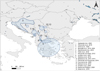 |
Fig. 1 The map of the Balkan Peninsula. |
3 Diversity in river valleys
Up until now, there has been primarily research on chironomids of river valleys in the Balkan Peninsula. They were investigated in Serbia (e.g. Janković, 1975; Zivić et al., 2001; Milošević et al., 2011), Montenegro (Płóciennik and Pešić, 2012), Greece (Karaouzas and Płóciennik, 2016) and Albania (Bitušík and Trnková, 2019). These studies focused particularly on streams, even though large river valleys in southern Europe contain smaller freshwater tributaries and sources (Fig. 2). These include springs, small brooks situated in the valley margins and foothills, as well as additional seepages, small ponds, wells, and ditches. Each of these habitats has a characteristic type of Chironomidae community. Idiado et al. (2018) and Gadawski et al. (unpublished data) have investigated a variety of small water bodies in the Zeta Valley basin in Montenegro (Figs. 1, 2, Tab. 1). The distinctive aquatic fauna diversity of this basin results in high species richness. As many as 57 Chironomidae taxa from 46 sites were recorded. The fauna of small rheocrenes is clearly distinct from other types of investigated habitats. It contains mainly species from subfamilies Orthocladiinae and Chironominae which is a typical of fast-flowing waters on mineral bottoms. These include but not limited to Orthocladius type S sensu Brooks et al. (2007), Cricotopus bicinctus-type sensu Brooks et al. (2007), Paratanytarsus intricatus (Goetghebuer, 1921), Paratendipes albimanus (Meigen, 1804) and Chironomus spp. (Tab. 1). Small rheocrenes located in forested and agricultural areas are inhabited by ubiquitous species from genera Chironomus and Procladius, as well as semiterrestrial ones like Smittia species. Slow-flowing rheocrenes with semiaquatic habitats have a diverse fauna, including species typical of cold and oligotrophic habitats and semiaquatic ones, such as Micropsectra spp., C. bicinctus-type, Limnophyes spp., Zavrelimyia spp., Bryophaenocladius cf. flexidens (Brundin, 1947), Diamesa spp., Rheocricotopus fuscipes (Kieffer, 1909) or Synorthocladius semivirens (Kieffer, 1909) (Tab. 1). Seepages and ditches are similar in terms of their fauna and include many rheophile species: Rheocricotopus effusus (Walker, 1856), O. type S, Zavrelimyia, C. bicinctus-type, Corynoneura cf. antennalis Kieffer, 1921, R. fuscipes. Astatic waters in marginal zones of mainstream valleys have poor diversity of fauna dominated by Limnophyes spp. and Thienemannimyia-type genera agg. sensu Brooks et al. (2007) (Tab. 1). In smaller river basins of the northern Balkans, like the Cvrcka River basin, human impact weighs on the environmental character of marginal valley springs, but Chironomidae communities defy simple classification, often depending more on bottom substrate complexity than oxygen concentration and conductivity reflecting chemical water pollution (Płóciennik et al., 2016). Hard bottom substrates may play the most important role in species composition. Even in the case of upland valleys where the altitude ranges is within less than 500 m a.s.l., elevation influences spring midge assemblages. There are clear differences in diversity and abundance in valley springs. Communities which reveal the highest diversity are characteristic of natural springs without organic waste and algae vegetation, manifesting anthropogenic disturbance. The high abundance of Chironomus species can be seen in rheocrenes, that are outliers of the springs' general environmental pattern. Different zones of rheocrenes, particularly eucrenon and hypocrenon, are characterised by distinct benthic communities and indicator species. For instance, Prodiamesa olivacea (Meigen, 1818) prefers the spring source, while members of the genus Paraphaenocladius prefer spring brooks (Pešić et al., 2016; Płóciennik et al., 2016). These species preferences conclude that the small water bodies of valleys have variant hydrological charterer and can also be transformed by local anthropogenic variables. These variations in the hydrological regimes are the main reasons for river valleys to host patchy diverse communities. These diverse communities can be found in hydrological systems consisting of spring, ditches, wetlands, ponds and other small water bodies hosting Chironomidae fauna that can overrich in diversity the main river channel. Instead of protecting individual species, protecting the natural habitats can protect the biodiversity within it (Lauge-Madsen, 1995). If human activity becomes sustainable, it may increase the richness of habitats suitable for chironomids as an ecologically diverse and resistant group of insects.
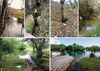 |
Fig. 2 Photos of the small water bodies inhabited by Chironomidae: A − pond, B − rheocrene) Zeta Valley (country: Montenegro); C, D) a typical springs in the Accursed Mountains (country: Republic of Kosovo); E, F) a typical springs of Lake Skadar (country: Montenegro). |
Drivers of Chironomidae diversity obtained from literature data.
4 Altitudinal zonation in mountain springs
The Balkan Peninsula is a mountainous region. In the higher altitudes, small water bodies are mostly springs (rheocrenes and brooks) that are sources for intermittent and perennial streams. The mountain springs are specific habitats, where hydrological conditions strongly depend on weather conditions, which are substantially different in the Mediterranean mountains than in lowlands (Čerba et al., 2020). Seasonal variations in temperature, such as much lower temperatures in high altitudes than in valleys, and high precipitation have an important influence on invertebrate communities. The structure of habitat conditions in streams also variate with altitudinal plant communities zonation (Rahbek, 1995, Słowińska and Jaskuła, 2021). The Chironomidae communities were recently investigated in the Accursed Mountains by Berlajolli et al. (2019). While investigating the seasonality of two springs near the city of Peja, they found that Chironomidae and Amphipoda constitute the main component of the assemblages. The investigated springs were very small water bodies where Chironomdiae abundance and species composition strongly varied seasonally, depending on their life cycles. Because midges have a terrestrial dispersal stage, they easily colonise small water bodies that are distant from each other, but they are also absent in small aquatic habitats during some part of their life cycle. Two first larval stages are also very small and difficult to detect. This all affects their detectable seasonal biodiversity pattern (Berlajolli et al., 2019). This problem, along with difficult logistical access to the mountain regions are the reasons for the relatively low faunistic recognition of mountain midge fauna in the southern Balkans. In comparison, less elevated regions of Croatia and Serbia are better studied. The mountainous midge fauna of Balkans has not been investigated extensively especially in the south-west (Płóciennik and Pešić, 2012; Idiado et al., 2018; Čerba et al., 2020). Recent studies on nearly 40 springs distributed over a wide altitude range in the Accursed Mountains indicate high Chironomidae species richness in mountain springs (Berlajolli et al., 2020). In this area, a set of 42 taxa (from species to genus level) were collected. Orthocladiinae were the most species-rich subfamily among Chironomidae. The midge community composition of mountain springs depends on local physical and chemical environmental variables, including the morphological microhabitat composition, like in other freshwater ecosystems. However, the randomness of these factors, related to the distance between springs, changeable weather, and other incidental factors, influence species dispersion. This would make these communities much more variant than the midge communities of the large lowland water bodies. The altitudinal gradient of Chironomidae communities follows mainly the precipitation-related hydrological conditions. Conductivity is the secondary factor influencing the composition of midge communities, revealing higher values at lower elevations. Finally, the local physical factors such as the presence of submerged branches and water temperature, varying by altitude, influence the midge assemblages. In the Accursed Mountains, four altitudinal zones can be recognized: (1) the upland zone (470-700 m a.s.l.) dominated by R. effusus, Chaetocladius dentiforceps (Edwards, 1929) agg., Diamesa spp., and Micropsectra type A sensu Brooks et al. (2007); (2) the lower mountain zone (700-1400 m a.s.l.) dominated by Diamesa spp., M. type A and Orthocladius (Euorthocladius) species; (3) the higher mountain zone (1400–1500 m a.s.l.) with dominant R. effusus, Euorthocladius spp., Tvetenia bavarica (Goetghebuer, 1934), and Micropsectra contracta-type sensu Brooks et al. (2007); and (4) the topmost alpine zone (1500–1700 m a.s.l.) settled mainly by Orthocladius (Eudactylocladius) species, Paraphaenocladius penerasus (Edwards, 1929), and Dixidae. The higher mountain zone (1400–1500 m a.s.l.) has the most diverse midge assemblages due to its stable perennial hydrological conditions.
Research on mountain rheocrenes and brooks prove that the local fauna variability coming from the randomness of colonisation pattern has in fact an ecogeographical background. Bedrock geology, climate zonation and riparian vegetation patterns shape Chironomidae zoogeography on a large spatial scale. This was also proven for larger rheocrenes communities in mainland Greece (Płóciennik and Karaouzas, 2014).
5 Diversity in Lake Skadar suclacustrine springs (in the Montenegro/Albania border region)
A unique combination of geological and climatic factors, as well as the complex geological history, makes the Mediterranean region one of the 25 most important biodiversity and endemism hot-spots worldwide (Myers et al., 2000; Woodward, 2009; Blondel et al., 2010). Skadar Lake is one of the main components of this region, well-known for its high freshwater biodiversity and endemicity. Many invertebrate taxa are reported to be endemic for the lake or its surroundings, i.e. Spirosperma scodraensis (Hrabĕ 1958), Tubificidarum hrabei Karaman, 1973, Trichodrilus montenegrinus Karaman, 1973, Dina nesemanni Grosser, Rewicz, Jovanović, Zawal & Pešić 2023 Nitocrella longa Karanovic, 2000, Pseudocandona regisnikolai Karanovic and Petkovski, 1999, Laurogammarus scutarensis (Schäferna, 1923); (Pešić et al., 2018; Grosser et al., 2023). It is the biggest lake in the Balkan Peninsula, situated in the Zeta-Skadar valley, supplied by a system of springs, predominantly associated with the local network of karstic connections (Glöer and Pešić, 2009; Pešić and Glöer, 2013). The large diversity and richness of the lake basin fauna could be explained by its location in the climatic zone, habitat diversity, spring system connection, environmental protection programmes and relatively low human impact.
As mentioned above, one characteristic feature of the Lake Skadar water balance is its high inflow from many temporary and permanent karstic springs. The coast of the lake includes numerous bays with a variety of such springs (Pešić et al., 2018, 2019). Some of them are sublacustrine and situated in cryptodepressions. Water entering the lake is substantially harder than river water, probably owing to its direct limestone source (Lasca et al., 1981; Grabowski et al., 2018). There are about thirty such springs. The best-known and investigated are Karuč and Raduš, with the latter being the deepest at about 60 m. The Chironomidae diversity at such depths is very low, with only two species reported up to now from the depth of 55 m: Polypedilum convictum (Walker, 1856) and Chironomus plumosus (Linnaeus, 1758). Communities of different habitat types in Skadar Lake are given in Table 1. (Gadawski et al., 2022b).
The rich species diversity of Chironomidae is supported by various habitats present in the Lake Skadar catchment. The southern and south-western shoreline of the lake is rocky, with boulders, stones and coarse gravel. This part of the Lake Skadar is settled mostly by Acricotopus sp., Corynoneura (e.g., Corynoneura gratias Schlee, 1968 and C. edwardsi Brundin, 1949), Cricotopus (e.g., Cricotopus sylvestris (Fabricius, 1794) and Cricotopus bicinctus (Meigen, 1818)), Dicrotendipes (e.g., Dicrotendipes lobiger (Kieffer, 1921); Dicrotendipes nervosus (Staeger, 1839); Dicrotendipes notatus (Meigen, 1818); Dicrotendipes pulsus (Walker, 1856)); Limnophyes (e.g., Limnophyes minimus (Meigen, 1818) and Limnophyes natalensis (Kieffer, 1914)), Orthocladius (e.g., Orthocladius abiskoensis Thienemann, 1937, Orthocladius excavatus Brundin, 1947, Orthocladius luteipes Goetghebuer, 1938, Orthocladius oblidens (Walker, 1856), Orthocladius pedestris Kieffer, 1909, Orthocladius rivicola Kieffer, 1911, Orthocladius rubicundus (Meigen, 1818)), Parachaetocladius (e.g., Parachaetocladius abnobaeus (Wülker, 1959)), Paratrichocladius (e.g., Paratrichocladius rufiventris (Meigen, 1830)) and Pseudosmittia (e.g., Pseudosmittia trilobata (Edwards, 1929)) (Tab. 1) (Gadawski et al., 2022b).
The most recent study (Gadawski et al., 2022b) reports that krenal and rhithral springs in Skodra spring system, with sandy and stone bottoms, are also inhabited by such species as Polypedilum nubeculosum (Meigen, 1804), Chironomus alpestris Goetghebuer, 1934 and species belonging to the genus Tanytarsus. Some of the springs are grouped in small areas, forming pools with sandy and stony bottoms but covered with silt where slower water current can be observed. Such places are inhabited mostly by species such as O. rivicola, C. bicinctus, C. edwardsi and P. nubeculosum (Tab. 1). Some of the species reported in the spring system were characteristic exclusively for running waters e.g., Brillia bifida (Kieffer, 1909), Conchapelopia pallidula (Meigen, 1818), Eukiefferiella brevicalcar (Kieffer, 1911), Eukiefferiella clypeata (Kieffer, 1923), Tanytarsus ejuncidus (Walker, 1856), Thienemannimyia laeta (Meigen, 1818) (Tab. 1). Generally, species belonging to the Cricotopus genus are more abundant in polluted ecosystems of Skadar Lake e.g., species belonging to groups: Cricotopus pilosellus Brundin, 1956, Cricotopus tibialis (Meigen, 1804), Cricotopus fuscus (Kieffer, 1909), Cricotopus magus Hirvenoja, 1973, Cricotopus tremulus (Linnaeus, 1758), Cricotopus pulchripes Verrall, 1912, Cricotopus septentrionalis Hirvenoja, 1973, Cricotopus claripes Hirvenoja, 1973, Cricotopus tristis (Hirvenoja, 1973). In the Skadar Lake basin, larvae of C. sylvestris are very frequent in habitats associated with emergent and submerged vegetation with growing aquatic macrophytes and algae (Gresens et al., 2012; Moller Pilot, 2013).
The Skadar Lake ecosystem is complex. The lake itself is relatively young, and its central basin is a unified soft-bottom habitat, however it hosts diverse midge fauna associated with macrophytes. The littoral zone has rich collector, shredder and scraper assemblages living on a hard substratum. River mouths are dwelled by a taxa common for stagnant and flowing waters. Nevertheless, all that taxa are mostly widespread in Europe. High Chironomidae cryptodiversity and potential endemism in Lake Skadar is dependent mainly on old spring system that hosted the local biodiversity and speciation (Grabowski et al., 2018).
6 Future prospects
Wider sampling along with acquiring diverse sampling technique (i.e., aquatic and terrestrial) is very important for better understanding on small water bodies midge communities. The extensive sampling will allow the molecular tools to delimit cryptic species and improve the understanding of species diversity. Moreover, molecular methods can establish association between life stages and so that unknown or morpho-species, described based on larval stages, can be known. Investment in molecular barcoding may complement the ongoing faunistic studies, revealing endemics, cryptic species and genetically isolated populations (Gadawski et al., 2022a). The progress of knowledge on chironomids suggests that many species have large distribution ranges, but the presence of endemic cryptic species in the Skadar lake area and Balkan Peninsula generally cannot be excluded (Gadawski et al., 2022a) such as the recently discovered endemic chironomid species M. uva from Croatia (Giłka et al., 2013). In-depth faunistic studies of the Skadar Lake using molecular techniques have quite recently revealed high molecular, partly cryptic diversity (Gadawski et al., 2022a). This discovery suggests that many cryptic species may exist in understudied habitats even in such well-studied freshwater bodies as Skadar Lake's watershed. It can be concluded that a wider sampling effort should be applied to the Skadar Lake area Chironomidae investigation. The effort must be put in to coordinate the knowledge of immature stages sampled from the region to those based on adults. This can be accomplished using molecular methods, so that both the faunistic and biomonitoring studies may benefit. This purpose could be achieved through the implementation of sampling in different habitats in diffrent seasons of the year, and by implementing molecular techniques such as DNA barcoding (Brodin et al., 2013; Montagna et al., 2016; Baloğlu et al., 2018; Gadawski et al., 2022a). The method could be very useful for developing species checklists and for further improvement of the reference library of DNA barcodes for the region. Moreover, recognising the immature stage of European Chironomidae at the species level with good efficiency is a goal for the taxonomy of these insects, but also a very important prerequisite to make feasible the monitoring of European freshwater quality through DNA metabarcoding using Chironomidae as bioindicators (Brodin et al., 2013; Cranston et al., 2013; Carew et al., 2013; Carew and Hoffmann, 2015). However, identifying immature stages to species level often can not be achieved without the implementation of DNA-based methods.
7 Discussion and conclusions
Due to their size, isolation and seasonality, springs shelter diverse midge communities. Their conditions imply high spatial (natural) variability of community composition. In the river valleys, there is a large variety of springs and pools located from the peripheral valley slopes to the floodplain. Non-biting midges depend on microhabitat and water body permanence. Seasonal pools and seepages can host mainly semiterrestrial chironomid taxa, while perennial springs and ponds usually have species-rich fauna in valleys. There is also a clear gradient in community composition from flowing to more stagnant waters. Habitat complexity plays a crucial role for midges and the bottom substratum determines functional feeding groups. Human activity may favour taxa that are not a typical component of assemblages in the local fauna.
The mountains have a significant impact on the climate of the peninsula. The northern and central parts of the Balkans have a central European climate, characterised by cold winters, warm summers, and well-distributed rainfall. The southern and coastal areas, however, have a Mediterranean type of climate, with hot, dry summers and mild, relatively rainy winters (Allcock et al., 2020). This causes the dominance of cold stenotherm taxa mainly in springs at a higher elevation. Species composition in the mountain springs follows altitudinal zonation. Air temperature and precipitation influence the perennial hydrology of springs. For that reason, the higher mountain zone (1400-1500 m a.s.l.) has the most diverse midge communities. The bedrock plays a secondary role in influencing physical and chemical water conditions.
Precipitation and evaporation in the Lake Skadar catchment (including springs), as well as its bathymetry, causes large water level fluctuations from 4.5 to 10.4 m above the sea level. The highest precipitation in the region occurs during the spring while the lowest during late summer (Pešić et al., 2018, 2019). It causes the seasonal flooding of the springs and provides connection routes between them. It allows the exchange of fauna elements. Chironomid fauna inhabiting the spring system is less diverse compared to more varied lake habitats with macrophytes or submerged wood with higher water temperatures. On the other hand, some rare and less abundant species can be found in springs. In the Mediterranean lowlands, high temperature is a limiting factor for many benthic invertebrates. Many species occur only along the coast of Lake Skadar, in the vicinity of sublacustrine springs or at the mouths of rivers where water parameters vary from those observed within the lake.
Non-biting midge communities of small water bodies are an important and underestimated component of freshwater biodiversity. It is especially important in the Mediterranean Region − a biodiversity hot-spot in dry and warm climates.
Conflicts of interest
The authors declare no conflict of interest. The funders had no role in the design of the study; in the collection, analyses, or interpretation of data; in the writing of the manuscript, or in the decision to publish the results.
Acknowledgments
This work was supported by the National Science Center of Poland [grant number: 2016/23/N/NZ8/02123] and CEEPUS Freemover grants (CEEPUSCIII-Freemover-1314-68927, CIII-Freemover-1314-68973). Authors want to thank Przemysław Włodarczyk, Julia Trafalska and Xhemajl Berlajolli for help with field investigations and laboratory works associated with collecting data for this research.
References
- Allcock JB, Crampton RJ, Danforth L. 2020. Balkans. Encyclopedia Britannica, https://www.britannica.com/place/Balkans. [Google Scholar]
- Baloğlu B, Clews E, Meier R. 2018. NGS barcoding reveals high resistance of a hyperdiverse chironomid (Diptera) swamp fauna against invasion from adjacent freshwater reservoirs. Front Zool 15: 31. [CrossRef] [PubMed] [Google Scholar]
- Berlajolli V, Płóciennik M, Antczak-Orlewska O, Pesić V. 2019. The optimal time for sampling macroinvertebrates and its implications for diversity indexing in rheocrenes case study from the Prokletije Mountains. Knowl Manag Aquat Ecol 420: 6. [Google Scholar]
- Berlajolli V, Płóciennik M, Pesic V, Berlajolli Xh. 2020. Chironomidae of the Cursed Mountains (Bjeshkët e Nemuna National Park), Conference: BIODIVEST 2020, Craiova, Romania. [Google Scholar]
- Bianco PG. 1986. The zoogeographic units of Italy and the Western Balkans based on cyprinid species ranges (Pisces). Biologia Gallo-Hellenica 12: 291–299. [Google Scholar]
- Bitušík P, Trnková K. 2019. A preliminary checklist of Chironomidae (Diptera) from Albania with first records for the Balkan Peninsula. Zootaxa 4563: 361–371. [Google Scholar]
- Blondel J, Aronson J, Bodiou J-Y, Boeuf G. 2010. The Mediterranean Region. Biological Diversity in Space and Time. Oxford, UK: Oxford University Press, 383 p. [Google Scholar]
- Brodin Y, Ejdung G, Strandberg J, Lyrholm T. 2013. Improving environmental and biodiversity monitoring in the Baltic Sea using DNA barcoding of Chironomidae (Diptera). Mol Ecol Resour 13: 996–1004. [Google Scholar]
- Brooks SJ, Langdon PG, Heiri O. 2007. The identification and use of Palaearctic Chironomidae larvae in palaeoecology. QRA Technical Guide No. 10, Quaternary Research Association, London, UK, 276 p. [Google Scholar]
- Carew ME, Pettigrove VJ, Metzeling L, Hoffmann AA. 2013. Environmental monitoring using next generation sequencing: rapid identification of macroinvertebrate bioindicator species. Front Zool 10: 1–15. [Google Scholar]
- Carew ME, Hoffmann AA. 2015. Delineating closely related species with DNA barcodes for routine biological monitoring. Freshw Biol 60: 1545–1560. [CrossRef] [Google Scholar]
- Čerba D, Koh M, Ergović V, Mihaljević Z, Milošević D, Hamerlík L. 2020. Chironomidae (Diptera) of Croatia with notes on the diversity and distribution in various habitat types. Zootaxa 4780: 259–274. [Google Scholar]
- Cranston PS, Ang YC, Heyzer A, Lim RB, Wong WH, Woodford JM, Meier R. 2013. The nuisance midges (Diptera: Chironomidae) of Singapore's Pandan and Bedok reservoirs Raffles B Zool 61: 779–793. [Google Scholar]
- Dražina T, Špoljar M, Miliša M. 2022. Temporary Ponds in Mediterranean Islands: Oases of Biodiversity. In: Pešić V,Milošević D, Miliša M. (eds.), Small Water Bodies of the Western Balkans. The Handbook of Environmental Chemistry. Berlin, Heidelberg, Germany: Springer, pp. 93–108. [Google Scholar]
- Gadawski, P, Montagna, M, Rossaro, B, Giłka, W, Pešić, V, Grabowski, M, & Magoga, G. 2022a. DNA barcoding of Chironomidae from the Lake Skadar region: Reference library and a comparative analysis of the European fauna. Divers Distrib, 28, 28382857. [Google Scholar]
- Gadawski P, Rossaro B, Giłka W, Montagna M, Zawal A, Grabowski M. 2022b. First insights into the diversity and ecology of non-biting midges (Diptera: Chironomidae) of the unique ancient Skadar Lake basin (Montenegro/Albania). J Great Lakes Res 48: 538–550. [Google Scholar]
- Gasc JP. 1997. Atlas of amphibians and reptiles in Europe. Societas Europaea Hepretological and Muséum d'Histoire Naturelle, Paris, France, 516 p. [Google Scholar]
- Giłka W, Zakrzewska M, Baranov V, Dominiak P. 2013. Diagnostic clues for identification of selected species of the Micropsectra atrofasciata group, with description of M. uva sp. nov. from Croatia (Diptera: Chironomidae: Tanytarsini). Zootaxa 3702: 288–294. [Google Scholar]
- Glöer P, Pešić V. 2009. Stagnicola montenegrinus n. sp., a new species of Montenegro (Gastropoda: Lymnaeidae). Mollusca 27: 53–56. [Google Scholar]
- Grabowski M, Jabłońska A, Wysocka A, Pešić V. 2018. The Obscure History of the Lake Skadar and Its Biota. In: Pešić V,Karaman G, Kostianoy AG (eds.), The Skadar/Shkodra Lake Environment, Handbook of Environmental Chemistry. Berlin, Heidelberg, Germany: Springer, pp. 47–62. [CrossRef] [Google Scholar]
- Gresens S, Stur E, Ekrem T. 2012. Phenotypic and genetic variation within the Cricotopus sylvestris species-group (Diptera, Chironomidae), across a Nearctic-Palaearctic gradient. Fauna Norvegica 31: 137–149. [CrossRef] [Google Scholar]
- Griffiths HI, Krystufek B, Reed JM. 2004. Balkan biodiversity: pattern and process in the European biodiversity hotspot. Amsterdam, The Netherlands: Kluwer Academic Publishers, 191 p. [Google Scholar]
- Grosser C, Rewicz T, Jovanović M, Zawal A, Pešić V. 2023. Integrative taxonomy reveals a new species of the leech genus Dina R. Blanchard, 1892 (Annelida, Hirudinida: Erpobdellidae) from theancient Skadar Lake basin in Montenegro. The European Zoological Journal 90: 383–394. [Google Scholar]
- Idiado E, Płóciennik M, Włodarczyk P, Bilecka J, Gligorović B, Paviceivić A, Pesić V. 2018. Chironomidae of springs in the Zeta Valley and the adjacent regions. 3rd Central European Symposium for Aquatic Macroinvertebrate Research Proceedings, 8–13 July 2018, Lodz, Poland. [Google Scholar]
- Ilieska R, Smiljkov S. 2020. Preliminary investigations of the chironomid larvae fauna (Chironomidae, Diptera) from the Mavrovo reservoir − Republic of Macedonia. Acta Biol 27: 117–130. [CrossRef] [Google Scholar]
- Janković M. 1975. Larval Populations of Chironomidae in the Periphyton of the Yugoslav Part of the Danube Between Biograd and Tekija, (In German). Arch Hydrobiol Supplement B 44: 515–524. [Google Scholar]
- Janković M. 1967. Prilog poznavanju Chironomidae Srbije. Bulletin du Museum d'Histoire Naturelle, Belgrade. [Google Scholar]
- Karaouzas I, Płóciennik M. 2016. Spatial scale effects on Chironomidae diversity and distribution in a Mediterranean River Basin. Hydrobiologia 767: 81–93. [CrossRef] [Google Scholar]
- Lauge-Madsen B. 1995. Danish Watercourses. Ten Years with the New Watercourse Act: Collected Examples of Maintenance and Restoration. Ministry of Environment and Energy, Danish Environmental Protection Agency, Denmark, 208 p. [Google Scholar]
- Lasca NP, Radulović V, Ristić RJ, Cherkauer DS. 1981. Geology, hydrology, climate and bathymetry of Lake Skadar. In: Karaman GS, Beeton AM (eds.), The biota and limnology of Lake Skadar, University Veljko Vlahović, Institute of Biological and Medicine Research Titograd. Washington, DC: Smithsonian Institution, pp. 17–38. [Google Scholar]
- Mamos T, Wattier R, Majda A, Sket B, Grabowski M. 2014. Morphological vs. molecular delineation of taxa across montane regions in Europe: the case study of Gammarus balcanicus Schäferna, 1922 (Crustacea: Amphipoda). J Zool Syst Evol Res 52: 237–248. [Google Scholar]
- Mamos T, Wattier R, Burzyński A, Grabowski M. 2016. The legacy of a vanished sea: a high level of diversification within a European freshwater amphipod species complex driven by 15 My of Paratethys regression. Mol Ecol 25: 795–810. [Google Scholar]
- Marković V, Atanacković A, Tubić B, Vasiljević B, Kračun M, Tomović J, Nikolić V, Paunović M. 2012. Indicative status assessment of the Danube River (Iron Gate sector 849-1,077 km) based on the aquatic macroinvertebrates. Water Res Manage 2: 41–46. [Google Scholar]
- Milošević D, Milosavljević A, Predic B, Medeiros A, Zdravković D, Stojkovic M, Kostić T, Spasić F, Leese F. 2019. Application of deep learning in aquatic bioassessment: towards automated identification of non-biting midges. Sci Total Environ 711: 135160. [Google Scholar]
- Milošević D, Stojanović K, Đurđević A, Marković Z, Stojkovic M, Živić M, Živić I, 2018. The response of chironomid alpha taxonomic and functional diversity to fish farm effluent pollution in lotic systems. Environ Pollut B 242: 1058–1066. [Google Scholar]
- Milošević D, Simić V, Stojković M. 2012. Chironomid faunal composition represented by taxonomic distinctness index reveals environmental change in a lotic system over three decades. Hydrobiologia 683: 69–82. [CrossRef] [Google Scholar]
- Milošević D, Stojkovic M, Čerba D, Petrovic A, Paunović M, Simić V. 2014. Different aggregation approaches in the chironomid community and the threshold of acceptable information loss. Hydrobiologia 727: 35–50. [Google Scholar]
- Milošević D, Simić V, Todosijević I, Stojković M. 2011. Checklist of the family Chironomidae (Diptera) of southern Morava River basin, Serbia. Biologica Nyssana 2: 123–128. [Google Scholar]
- Moller Pilot H. 2013. Chironomidae Larvae of the Netherlands and Adjacent Lowlands. III. Biology and Ecology of the aquatic Orthocladiinae − Prodiamesinae − Diamesinae − Buchonomyiinae − Podonominae − Telmatogetoninae. KNNV Publishing, Zeist, The Netherlands, 312 p. [Google Scholar]
- Montagna M, Mereghetti V, Lencioni V, Rossaro B. 2016. Integrated Taxonomy and DNA Barcoding of Alpine Midges (Diptera: Chironomidae). PLoS ONE 11: e0159124. [CrossRef] [PubMed] [Google Scholar]
- Myers N, Mittermeier R, Mittermeier C. 2000. Biodiversity hotspots for conservation priorities. Nature 403: 853–858. [CrossRef] [PubMed] [Google Scholar]
- Ntislidou C, Bobori D, Lazaridou M, Rossaro B. 2019. New Records of Chironomidae Species (Insecta: Diptera) from Greek Lakes. Acta Zool Bulgar 71: 25–28. [Google Scholar]
- Oliver DR. 1971. Life history of the Chironomidae. Annu Rev Entomol 16: 211–230. [Google Scholar]
- Paunović M, Simić V, Jakovčev-Todorović D, Stojanović B. 2005. Results of investigating the macroinvertebrate community of the Danube river on the sector upstream from the iron gate (km 1083-1071). Arch Biol Sci 57: 57–63. [Google Scholar]
- Pešić V, Milošević D, Miliša M. 2022a. Small Water Bodies of the Western Balkans. The Handbook of Environmental Chemistry, Springer, Berlin, Heidelberg, Germany, 451p. [Google Scholar]
- Pešić V, Dmitrović D, Savić A. 2022b. Riparian Springs—Challenges from a Neglected Habitat. In: Pešić V, Milošević D, Miliša M. (eds.), Small Water Bodies of the Western Balkans. The Handbook of Environmental Chemistry. Berlin, Heidelberg, Germany: Springer, pp. 109–128. [Google Scholar]
- Pešić V, Grabowski M, Hadžiablahović S, Marić D, Paunović M. 2019. The Biodiversity and Biogeographical Characteristics of the River Basins of Montenegro. In: Pešić V, Paunović M, Kostianoy AG (eds.), The rivers Berlin, Heidelberg, Germany: Springer, pp. 157–200. [Google Scholar]
- Pešić V, Gadawski P, Gligorović B, Glöer P, Grabowski M, Kovács T, Murányi D, Płóciennik M. 2018. The diversity of the Zoobenthos communities of the Lake Skadar/Shkodra Basin. In: Pešić V,Kostianoy AG, Karaman GS (Eds.), The Skadar/Shkodra Lake environment. The Handbook of Environmental Chemistry. Berlin, Heidelberg, Germany: Springer, pp. 255–293. [Google Scholar]
- Pešić V, Dmitrović D, Savić A, Von Fumetti S. 2016. Studies on eucrenal-hypocrenal zonation of springs along the river mainstream: a case study of a karst canyon in Bosnia and Herzegovina. Biologia 71: 809–817. [CrossRef] [Google Scholar]
- Pešić V, Glöer P. 2013. A new freshwater snail genus (Hydrobiidae, Gastropoda) from Montenegro, with a discussion on gastropod diversity and endemism in Skadar Lake. ZooKeys 281: 69–90. [Google Scholar]
- Pinder LCV. 1986. Biology of freshwater Chironomidae. Annu Rev Entomol 31: 1–23. [Google Scholar]
- Płóciennik M, Dmitrović D, Pešić V, Gadawski P. 2016. Ecological patterns of Chironomidae assemblages in Dynaric karst springs. Knowl Manag Aquat Ecol 417: 11. [Google Scholar]
- Płóciennik M, Karaouzas I. 2014. The Chironomidae (Diptera) fauna of Greece: ecological distributions and patterns, taxalist and new records. Ann Limnol Int J Lim 50: 19–34. [Google Scholar]
- Płóciennik M, Pešić V. 2012. New records and list of non-biting midges (Chironomidae) from Montenegro. Biologia Serbica 34: 36–50. [Google Scholar]
- Rahbek C. 1995. The elevational gradient of species richness: A uniform pattern? Ecography 18: 200–205. [CrossRef] [Google Scholar]
- Skoulikidis NTh, Zogaris S, Karaouzas I. 2022. Chapter 15-Rivers of the Balkans. In: Tockner K, Zarfl C, Robinson CT (eds.) Rivers of Europe. The Netherlands Elsevier, Amsterdam, pp. 595–655. [CrossRef] [Google Scholar]
- Słowińska I, Jaskuła R. 2021. Distributional patterns of aquatic Empididae (Diptera) along an elevational diversity gradient in a low mountain range: An example from central Europe. Insects 12: 165. [CrossRef] [PubMed] [Google Scholar]
- Smiljkov S. 2001. Ecology and dynamics of Chironomidae fauna larva (Diptera: Chironomidae) from Ohrid Lake. Contr Sect Biol Sci Macedonian Acad Sci Arts 22: 47–56. [Google Scholar]
- Smiljkov S, Slavevska-Stamenković V. 2006. Chironomidae (Diptera) larvae fauna from the Mantovo reservoir and the mouth of river Kriva Lakavica. Conference of Water Observation and Information System for Decision Support (BALWOIS), Proceedings, Topic 6: Lakes 1–2. [Google Scholar]
- Stamenković O, Stojković P, Milošević D. 2019. Anthropogenic pressure explains variations in the biodiversity of pond communities along environmental gradients: a case study in south-eastern Serbia. Hydrobiologia 838: 65–83. [CrossRef] [Google Scholar]
- Stevanović Z, Pekaš Ž, Stevanović AM, Eftimi R, Radulović M. 2022. Springs as Essential Water Sources for Dependent Ecosystems in Karst. In: Pešić V, Milošević D, Miliša M (eds.), Small Water Bodies of the Western Balkans. The Handbook of Environmental Chemistry. Berlin, Heidelberg, Germany: Springer, pp. 1–20. [Google Scholar]
- Vallenduuk H. 2013. Comments on some species in tribe Chironomini. Chironomus, 26, 49–51. [Google Scholar]
- Woodward J. 2009. The physical geography of the Mediterranean. Oxford, UK: Oxford University Press on Demand, 704 p. [Google Scholar]
- Zivić I, Markovic Z, Brajkovic M. 2001. Macrozoobnthos in the Pusta Reka River, left tributary of the South Morava River. Arch Biol Sci 53: 109–122. [Google Scholar]
Cite this article as: Płóciennik M, Berlajolli V, Dmitrović D, Gligorović B, Pešić V, Gadawski P. 2023. The Chironomidae (Diptera) diversity in the Balkan Peninsula spring systems and other small water bodies. Int. J. Lim. 59: 6
All Tables
All Figures
|
Fig. 1 The map of the Balkan Peninsula. |
| In the text | |
|
Fig. 2 Photos of the small water bodies inhabited by Chironomidae: A − pond, B − rheocrene) Zeta Valley (country: Montenegro); C, D) a typical springs in the Accursed Mountains (country: Republic of Kosovo); E, F) a typical springs of Lake Skadar (country: Montenegro). |
| In the text | |
Current usage metrics show cumulative count of Article Views (full-text article views including HTML views, PDF and ePub downloads, according to the available data) and Abstracts Views on Vision4Press platform.
Data correspond to usage on the plateform after 2015. The current usage metrics is available 48-96 hours after online publication and is updated daily on week days.
Initial download of the metrics may take a while.